Inclusive design with JUNG
Barrier-free bathrooms and toilets with colourful switches
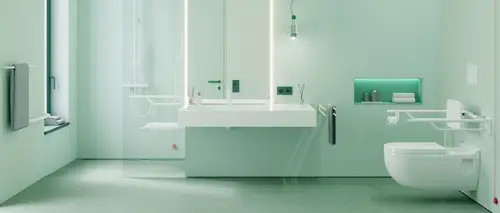
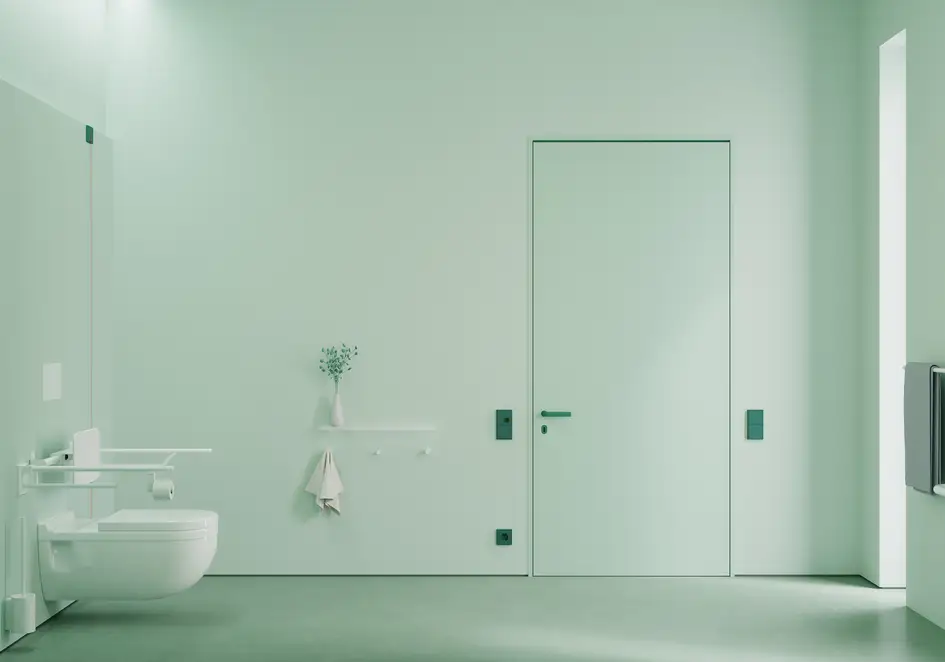
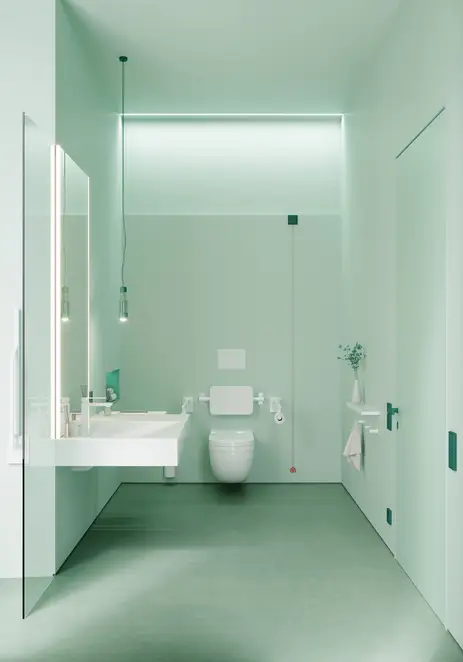
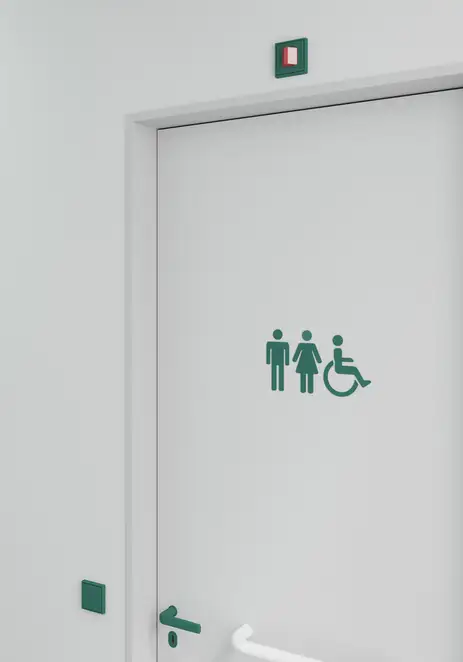
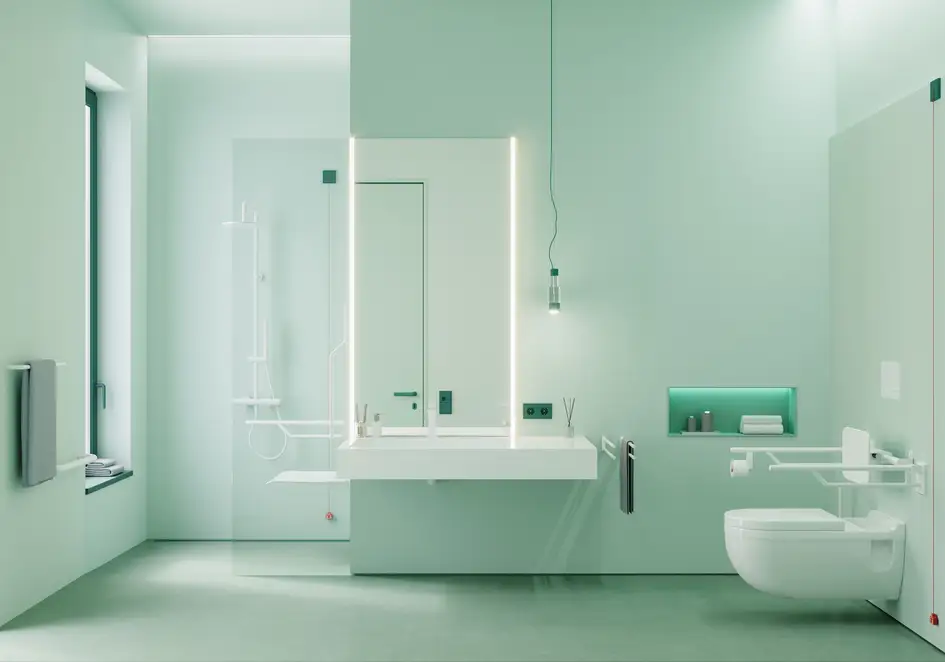
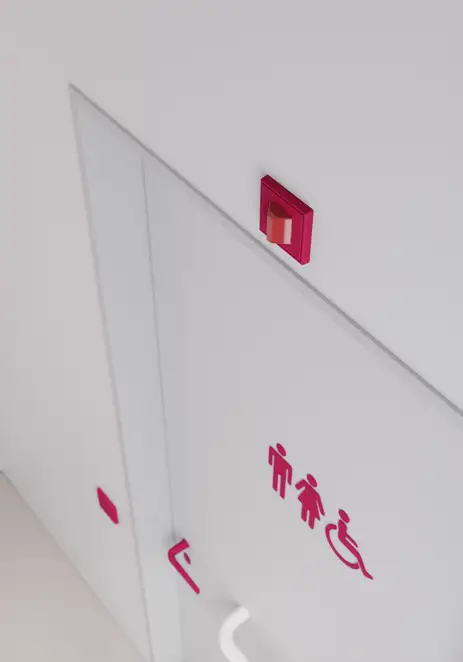
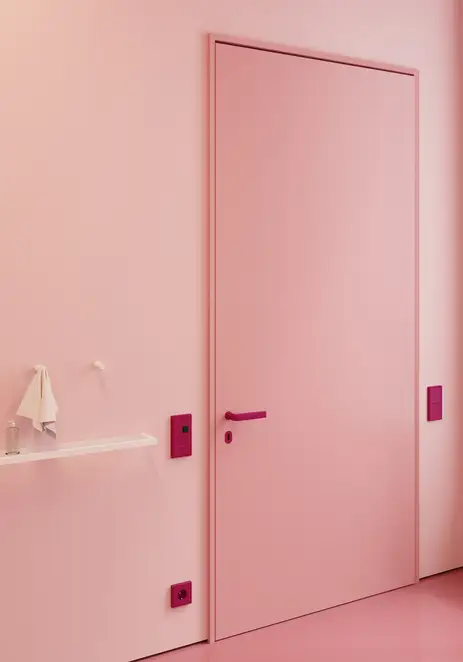
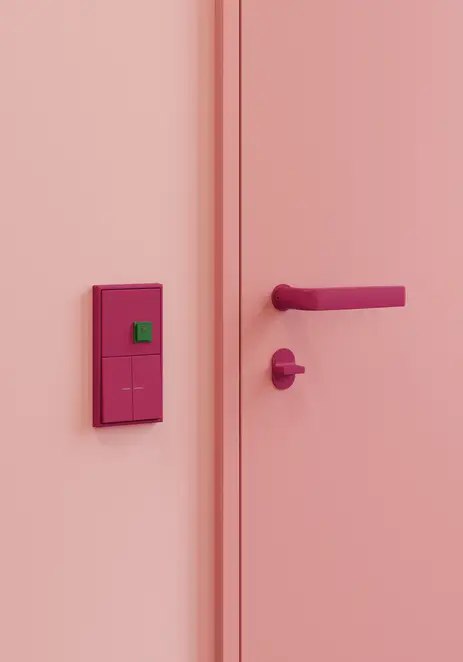
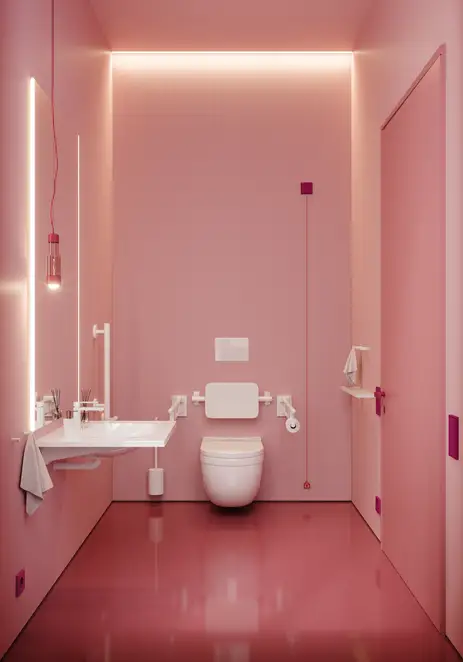
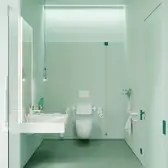
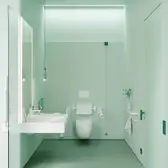
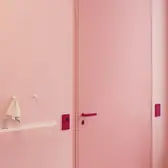
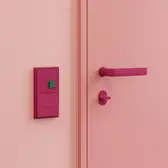
For the aesthetic design of barrier-free bathrooms and toilets, JUNG offers in the LS 990 switch range emergency systems in the complete range of Les Couleurs® Le Corbusier colours. In this way, in combination with products from other manufacturers with identical colours, such as FSB door handles, sanitary rooms can be created that are both inclusive and aesthetic.
Good design should also be a matter of course when it comes to barrier-free bathrooms and toilets. Often, however, the focus is on the purely functional aspects of accessibility. This is initially correct and also required by law. However, completely ignoring the issue of aesthetics is wrong, because just as all people with different physical abilities have a right to functionality and accessibility, they also have a right to individuality and well-being.
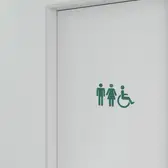
An accessible bathroom or toilet is designed to create a safe and comfortable environment for all user groups, regardless of their physical abilities or limitations. Accessible sanitary facilities must be easily accessible and easy to use, safety being the top priority. A good barrier-free design incorporates non-slip surfaces, sturdy grab bars and adequate lighting to prevent accidents in the bathroom. The bathrooms and toilets must be inclusive, i.e. they must take into account the needs of many different user groups equally. If they are located in public buildings, they must also be equipped with an emergency system according to DIN 18040-1.
Solutions for emergencies
JUNG offers emergency systems that enable affected persons to get help quickly and easily in the event of an emergency, such as a fall. In the AS, CD and LS series, components are offered as individual modules or entire sets, which consist, for example, of a pull-cord push button, call module, reset button and power supply unit for the power supply of the emergency system. If the pull-cord push-button or call button is pressed by a person seeking help, the call for help is indicated visually and, if desired, acoustically by the call module. The pull-cord push-button and call buttons also indicate the emergency call visually with a red reassurance light. The call remains active until it is deactivated by technical or nursing staff using the reset button.
In hospitals or care facilities, an uninterruptible power supply (UPS) is also required in accordance with DIN VDE 0834, which is guaranteed by a so-called UPS module. The presence of a person in the bathroom or toilet is indicated via a service room unit installed in the staff or reception room of a facility, and if necessary, the acoustic emergency call signal of the call module can also be temporarily suppressed there. In larger healthcare buildings, a service room terminal is used for the central monitoring of several rooms or emergency systems. Up to 20 incoming emergency calls are displayed visually and acoustically on the terminal via an integrated display. The JUNG emergency call sets not only meet all the requirements of DIN 18040-1 for publicly accessible buildings, they also comply with the core standard for the implementation of call systems of the VDE Association for Electrical, Electronic & Information Technologies (DIN VDE 0834) for care facilities, hospitals and other public facilities. The emergency call components from the LS series can also be embedded in a holistic design in all 63 colours of the Les Couleurs® Le Corbusier series, which greatly expands the design possibilities for barrier-free sanitary facilities.
Added value of colour
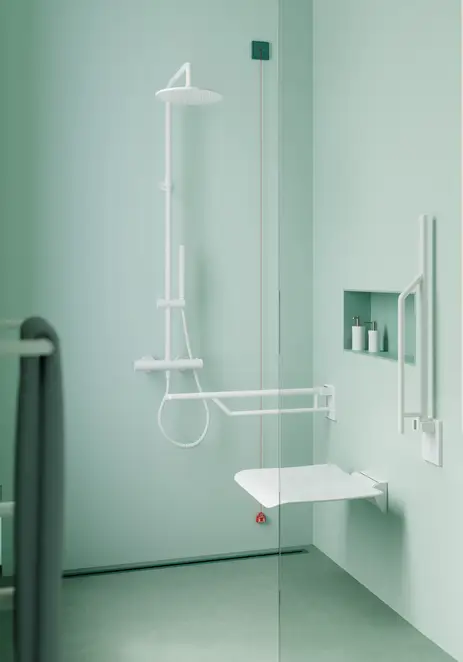
When barrier-free facilities, which of course must meet all the premises of functionality and safety, have a stylish and appealing design, this contributes appreciatively to the well-being of users. The skilful integration of supporting elements such as grab bars and seats into an overall aesthetic design is perceived as added value, enrichment and positive recognition. A clever colour design improves the visibility of important elements such as handrails and door edges, as well as switches and emergency systems, through visual contrasts. This is especially important for people with visual impairments. In addition, colours always have an emotional effect. Bright and friendly tones create a positive atmosphere and ensure relaxation and the well-being of users. Especially in sanitary areas as the most intimate places of privacy, people are particularly susceptible to this.
Inclusion means individuality
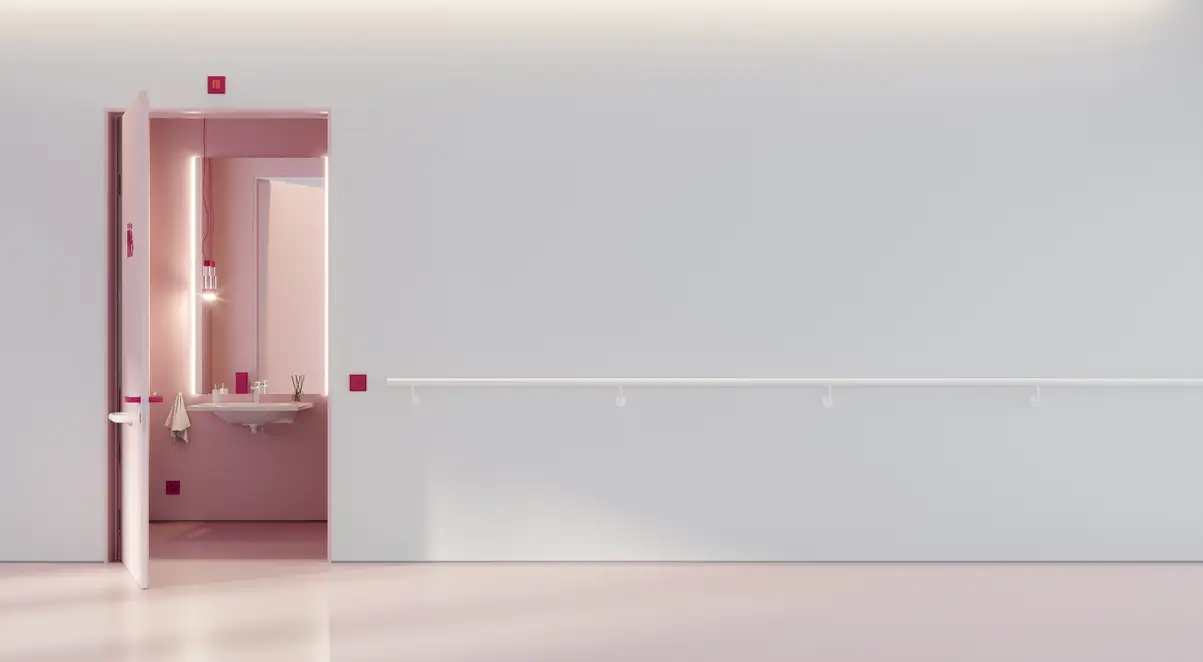
Due to regulations such as standards and regulations, barrier-free sanitary facilities are often standardized. In fact, the functional specifications can also be complied with while taking into account design trends and colour concepts. A modern and contemporary appearance that conveys individual preferences, styles or cultural preferences ensures that accessibility is no longer understood as a compromise, but as an integral part of a contemporary lifestyle. Colour and aesthetic design in barrier-free sanitary facilities create an environment that makes a clear statement for inclusion and equality – for example in hotels, companies or public buildings. They represent a step towards an inclusive and colourful society in which everyone can participate equally.
Images:
© JUNG / Danthree Studio




Gallery


