JUNG reference feature: Circular construction
Circular and resource-saving with JUNG
Circular construction is increasingly becoming a key concept for a sustainable future in the construction industry. The focus is on conserving resources through the flexible conversion of buildings, deconstruction and reuse. As a manufacturer of high-quality switch and building technology, JUNG is contributing to the implementation of these principles with durable products, some of which are made from recycled material or have cradle-to-cradle certification.
Whether through the use of materials that have already been recycled or can be reused in the future, modular and dismountable components or simply by opting for renovation and conversion instead of new construction, many innovative projects show that the responsible and conscious use of materials and existing buildings enables new and creative approaches in the construction industry. There is no one-size-fits-all approach to circular construction - working with existing materials, structures and local conditions makes each project unique. Circular architecture is the result of creative thinking, intelligent planning and bold implementation. It is precisely this new, sometimes spontaneous, adaptability of architecture, but also of those involved in its design, that is the key to the creation of resource-efficient buildings that have several cycles of use behind or ahead of them. Construction products made from recycled material or those with cradle-to-cradle certification support the achievement of the project goals.
Circular construction with JUNG
Often it is not only the large structural measures that are relevant, but also many small individual decisions, details and innovative product solutions that contribute to the holistic and circular implementation of an architectural idea. Take switches and sockets, for example. These everyday elements of a building's infrastructure also help to promote sustainable construction and to consistently implement the concept of a circular economy. Manufactured from high-quality and robust materials, JUNG switches and sockets not only impress with their timeless design, but also with their durability. (JUNG has already reported elsewhere on switches and sockets which, after decades of use, were removed, cleaned, refurbished and then reinstalled as fully functional control elements as part of a building renovation project - see the press release on the Reuse of electrical switches).
With the most frequently used classic switch LS 990 in alpine white, JUNG follows the cradle-to-cradle principle. A complex process ensures that all product components can either be completely returned to the biological cycle at the end of their service life or remain in the technical cycle. JUNG's recycled switches and sockets are made from plastic waste that is processed and reused. They are available in the A CREATION, A 550 and A FLOW switch ranges in matt anthracite and are made from 95% recycled material.
Innovative and resource-saving - spotlight on three JUNG conversion projects
Reference projects such as the Walderlebniszentrum (forest experience centre) Leupoldishain by FRIDA Architekten, the Kresings Studio in Münster by KRESINGS and the Ruperti House in Tittmoning by VPR Architekt:innen with Charlotte Reith, are impressive examples of the diversity of circular construction. Each of these buildings shows in its own way how raw materials can be kept in circulation with different strategies. With well thought-out usage concepts, aesthetic design and modern technology, the conversion, replacement and renovation projects are also equipped for a further phase of use. With solutions for efficient electrical engineering and intelligent building management, JUNG products also contribute to reducing the ecological footprint during operation.
Walderlebniszentrum / Forest Experience Centre, Leupoldishain
FRIDA Architekten, Dresden
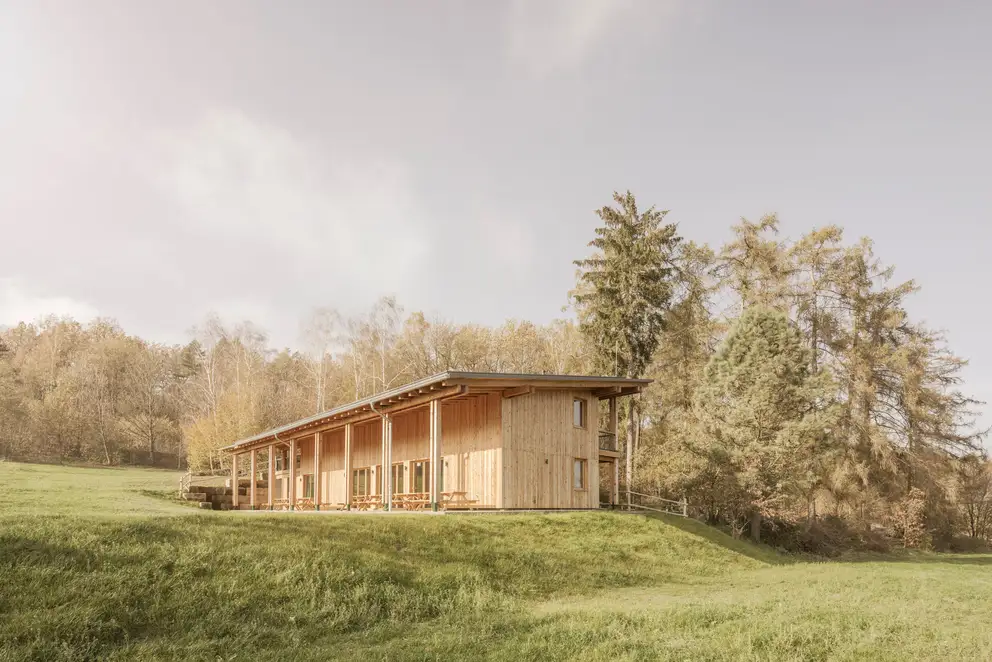
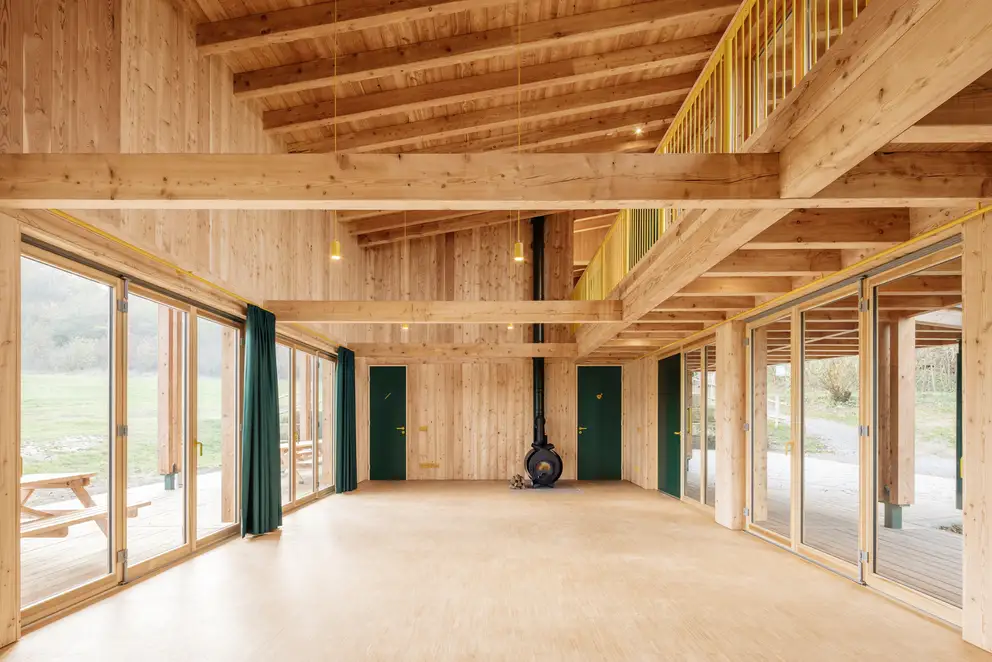
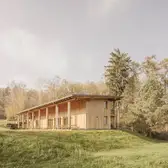
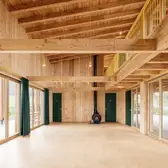
The Walderlebniszentrum event and training building on the outskirts of Leupoldishain near Königstein, designed by FRIDA Architekten from Dresden, replaces a dilapidated predecessor building that was demolished. The timber structure is used by the Saxon State Forestry Service and the Saxon Switzerland National Park Region as a forest education centre, and is mainly used by school groups. Almost all of the timber used in the construction and the facade was sourced from forestry operations in the forest districts of Saxon Switzerland and processed in regional sawmills. The timber structure was built using homogeneous materials and can at the end of its lifecycle be dismantled and reintegrated into the circular economy. Wherever possible, materials from the demolished predecessor building were reused, such as paving stones and the kitchen furniture.
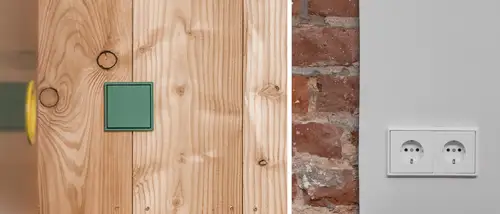
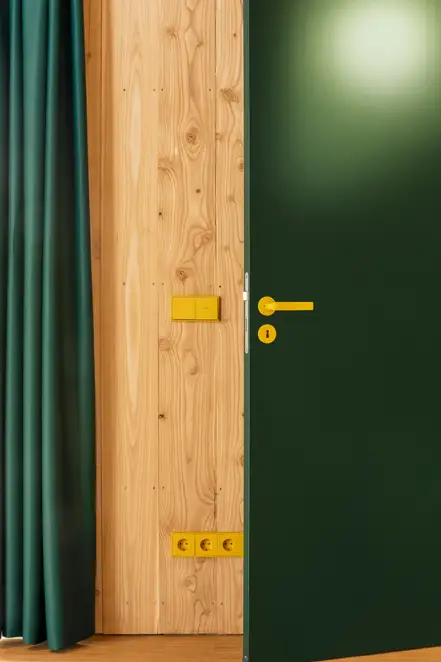
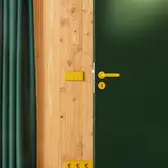
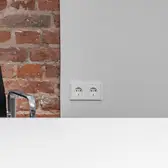
The spatial effect is strongly influenced by the materiality of the wood, accentuated by strong colour accents in green and yellow. The concept is based on colours found in Saxony's forests, and Le Corbusier's Les Couleurs® colour palette, which is based on pure natural tones. It was used to design fixtures such as railings, lamps, switches and sockets. For the latter, a bright yellow (4320W le jaune vif) and a muted green (4320G vert 59) from the LS 990 Les Couleurs® Le Corbusier range by JUNG were used. The FSB door handles were also selected from the same colour range, so that exciting and harmonious colour accents could be set by the switches and door handles at the same installation height. The Walderlebniszentrum Leupoldishain is an outstanding example of sustainable construction and the conscious use of regional resources. It combines modern, child-friendly architecture with traditional building methods.
KRESINGS Studio, Münster
KRESINGS, Münster
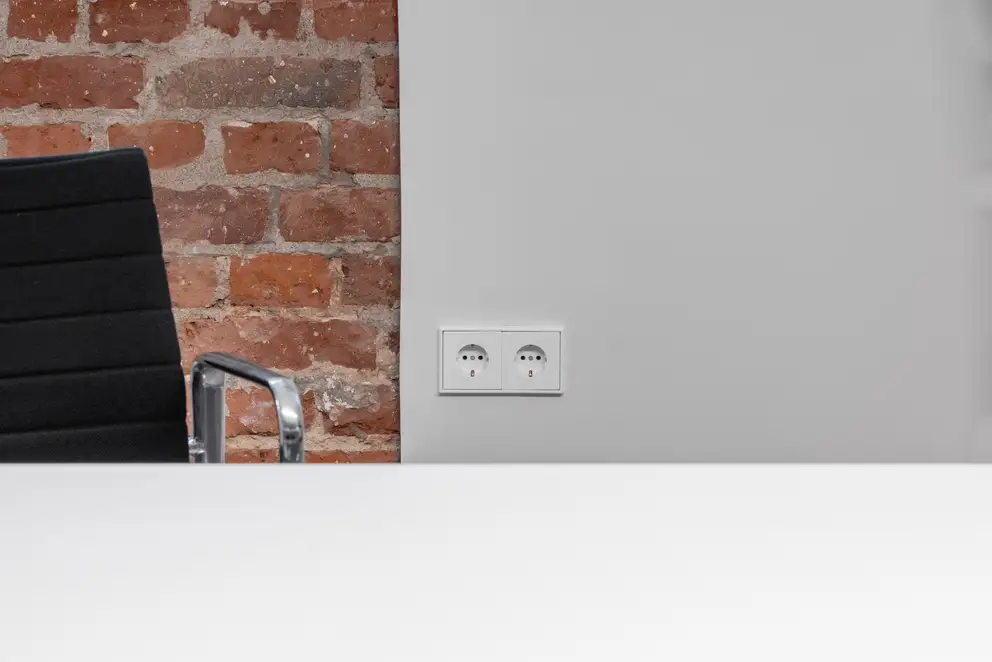
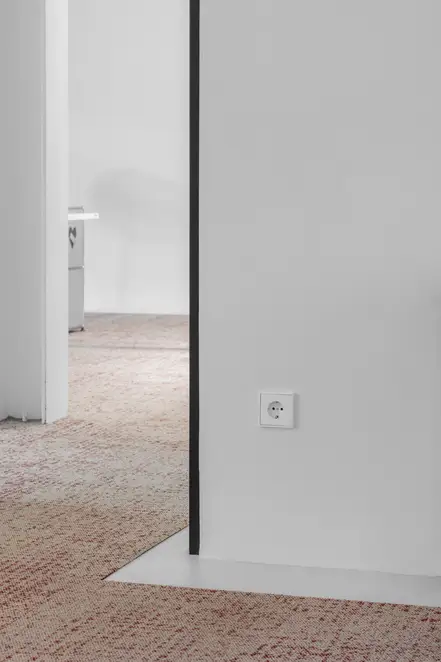
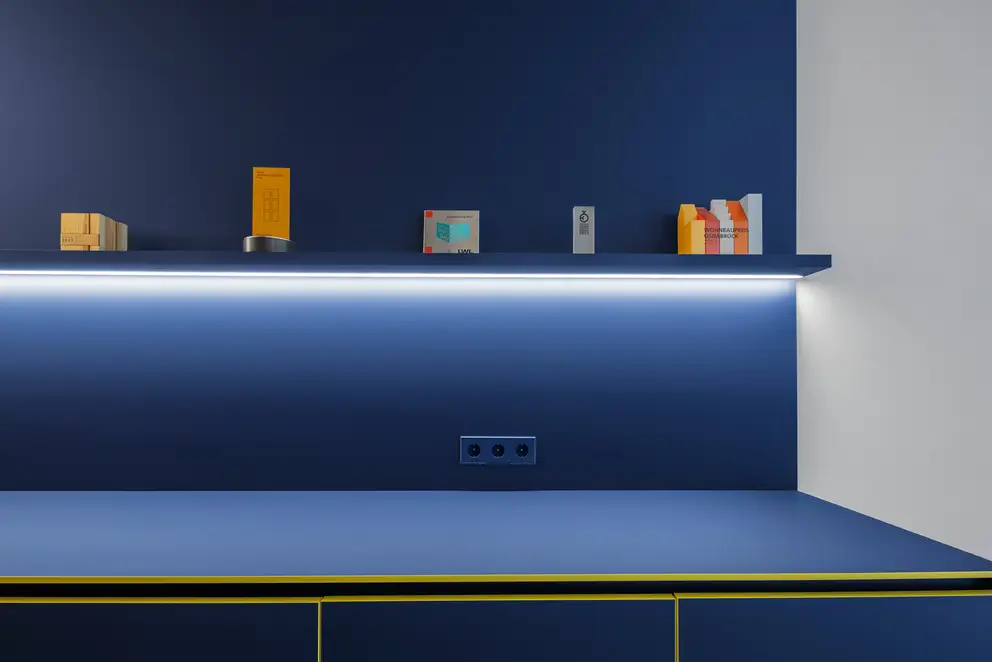
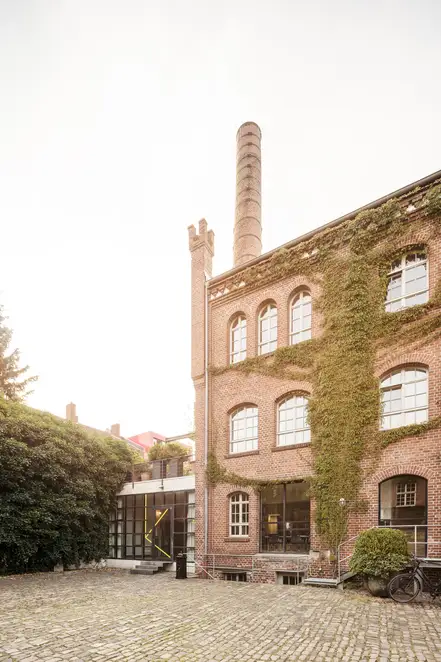
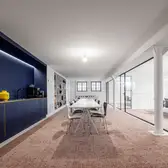
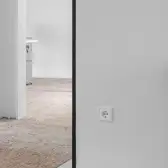
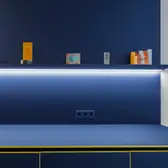
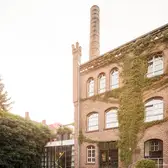
KRESINGS' new offices are located in the main industrial building on the site of the former grain distillery in Münster's Hansaviertel. The former industrial use of the complex is still clearly recognisable today by the Hanseatic brick architecture and the chimney that is visible from afar. The interior design highlights the contrast between the old and the new. Thick walls, exposed brickwork and heavy wooden beams are juxtaposed with lots of white, clear edges, smooth surfaces and geometric shapes. There are circular wall openings in the interior, cubic furniture, wall elements and fixtures in primary colours, all radically reduced and simple. In keeping with the simple design language of the interior, the LS 990 switch and socket range from JUNG is used, in alpine white and C2C-certified on the plaster background, and in "bleu outremer foncé" from the Les Couleurs Le Corbusier series in the brightly coloured kitchenette of the same colour.
"We cannot influence the outcome of the stories that take place in the spaces we design. But we can lay the foundations for good experiences by putting ourselves in the shoes of the people who will live, learn and work in our spaces. Following this credo of change and adaptation, the architects at KRESINGS have also adapted the new office space in the old industrial building to their needs, breathing new life into the building. The conversion of the industrial building shows how sensitive renovation can promote future-oriented construction by preserving the historic substance and harmoniously integrating modern elements.
Ruperti, Tittmoning
VPR Architekt:innen, Munich, in collaboration with Charlotte Reith
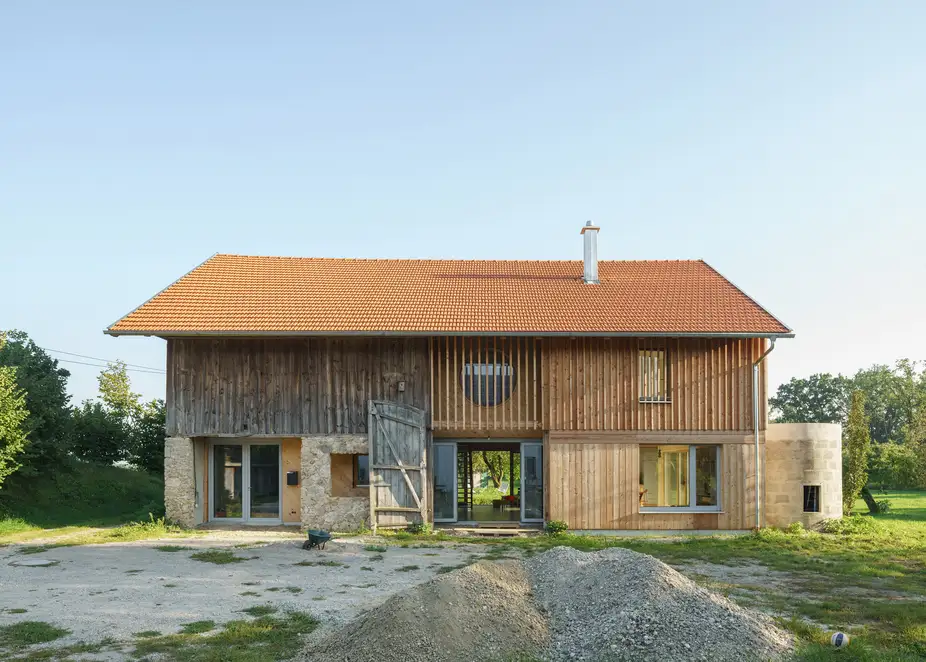
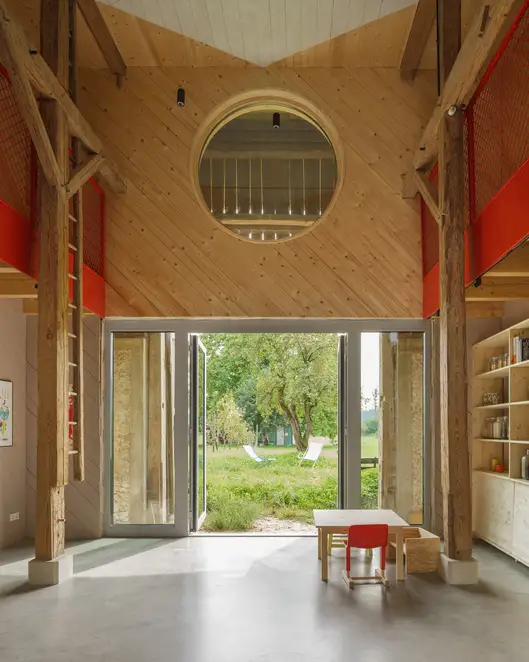
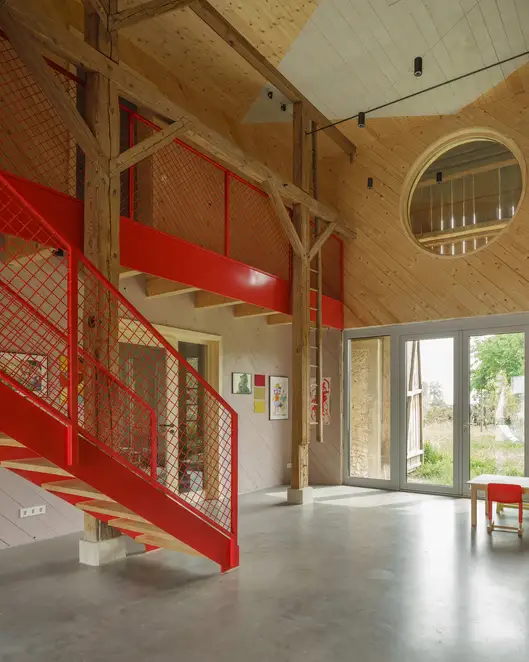
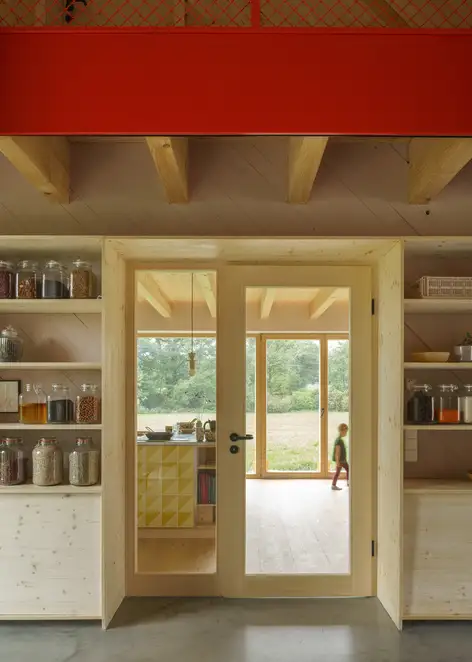
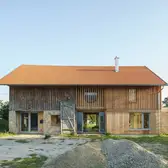
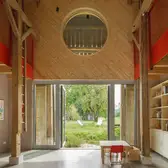
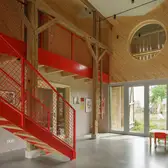
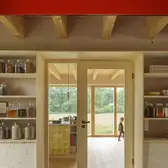
The conversion of an 1873 hay barn into a residential and workshop house for a large family in Tittmoning is an impressive example of the creative conversion of existing buildings according to the criteria of resource-saving, regional and circular construction. VPR Architekt:innen, in collaboration with Charlotte Reith, have created a modern property with rustic charm. By continuing to use the existing building fabric, it has been possible not only to save materials, but also to preserve the cultural identity of the site. The additional timber required for the new internal walls and the facade, for example, came from the family's own forest. Much of the work, such as the roofing, constructing the clay plaster walls and crafting the kitchen tiles, was carried out by the owners themselves.
The conversion follows an almost poetic approach, exposing the old layers and stories of the building while wrapping them in a new shell. The new spatial structure was inserted into the barn shell as a timber-framed house-within-a-house. The desire for circularity and responsible construction continues right through to the choice of electrical installations. The cradle-to-cradle certified JUNG LS 990 range in alpine white was used for the sockets and switches. The products can be completely returned to the technical cycle after their service life. The Ruperti project creates space for contemporary living and working in a rural context, combining traditional architecture with modern design.
Product information:
Switches and intelligent KNX technology with C2C certification
More than 50 individual products from JUNG in alpine white - including rocker switches, push-buttons, frames, inserts, classic sockets, sockets with USB ports and Safety+ inserts, covers and complete KNX modules - have been awarded the Cradle-to-Cradle Certified® Bronze certificate. A particular challenge was the certification of the complete KNX technology for smart home solutions, such as the touch sensor module and the room controller module with all its small and filigree components. The C2C-certified switches in the LS 990, LS CUBE, AS 500, A 550, A FLOW and A CREATION ranges, for example, not only enable intelligent and automatic control of smart buildings, but also make a demonstrable contribution to closed-loop recycling. Initially, JUNG concentrated on products in alpine white. In the process, however, 120 individual elements were also awarded the Bronze C2C Material Health Certificate™. The Material Health Certificate provides certainty about the materials used in the products and their supply chain.
Switches and sockets made of recyclate
The plastic covers and frames of the A CREATION, A 550 and A FLOW switch ranges in matt anthracite are made of 95% recycled material in accordance with DIN EN ISO 14021 and help to reduce the environmental impact of plastic waste in a resource-conserving way. Recycled material is a material obtained by processing and recycling plastic waste. In the recycling process, the recyclable materials are collected, sorted, cleaned and then mechanically shredded. This material is then melted down and processed into recyclate in accordance with DIN ISO 14021. The frames and covers for JUNG switches, push-buttons, rotary dimmers and sockets made from this recyclate cover a wide range of applications - from conventional installations to smart homes.
Architecture:
FRIDA Architekten
KRESINGS
VPR Architekt:innen mit Charlotte Reith
Images:
Henrik Schipper
Sebastian Schels
Downloads
Kontaktai
You have a press request?
Send email
Send email

Gallery


