Switches, sockets and more:
Aesthetic integration into interior design
An interior design without a wall design is like a painting without a canvas - it is the basis on which atmosphere, functionality and aesthetic harmony are created. The carefully thought-out integration of electrical switches and sockets into this wall design makes an important contribution to the design quality of a room.
Aesthetic design of the electrical installations
Interior designers influence the perception of spaces through the deliberate use of colour, materials, lighting, texture and structure. An often overlooked but important element of this design work is the arrangement and integration of switches and sockets. These technical necessities can add significant aesthetic value through clever placement, colour and material choice. When the arrangement of electrical equipment is seen as a design opportunity, special and functional solutions can be found. With colour matching, high-quality materials, textured surfaces and integrated lighting, electrical controls set visual accents. Creative groupings and themed designs highlight them, while a minimalist design blends seamlessly into a room.
Organisational principles for switches and sockets
The placement of electrical switches and sockets is, of course, primarily a functional consideration. Standard installation heights provide a starting point for planning. For example, sockets in living rooms should be 30 cm above the floor, and light switches near doors should be 105 cm above the floor. In kitchens and work areas, they should be 115 cm above the floor or 20 cm above the worktop. In addition, the design and arrangement of electrical controls can be based on various design principles such as structure, rhythm, symmetry and asymmetry.
Design possibilities with electrical controls
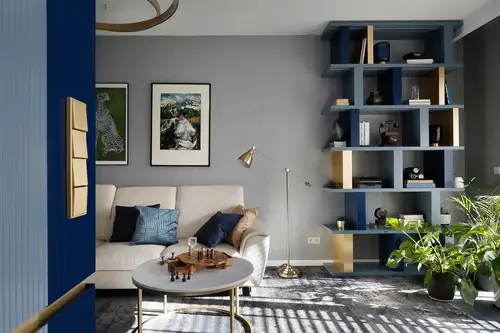
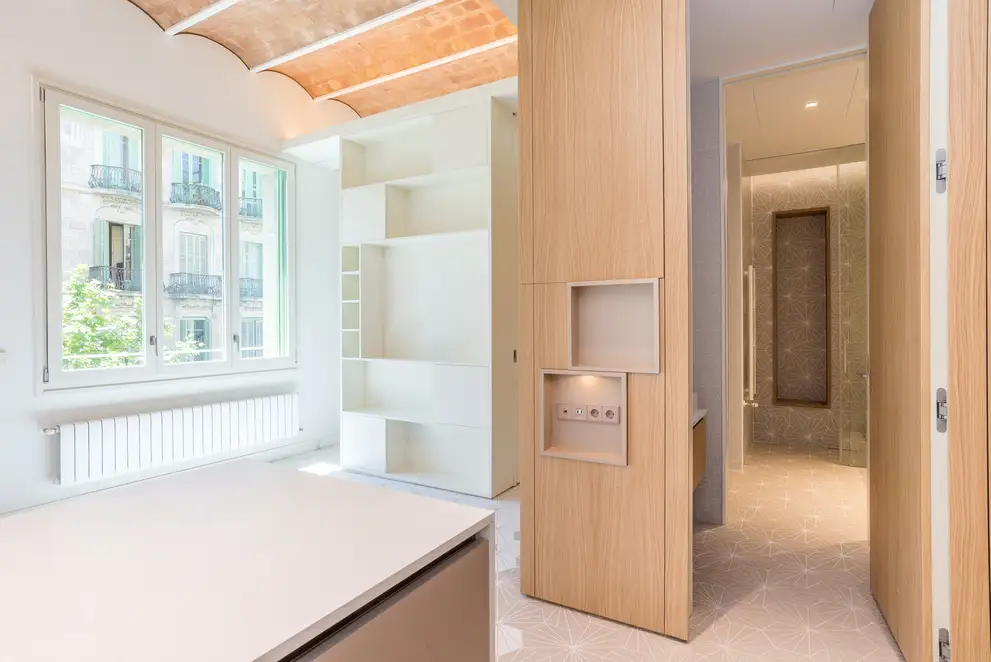
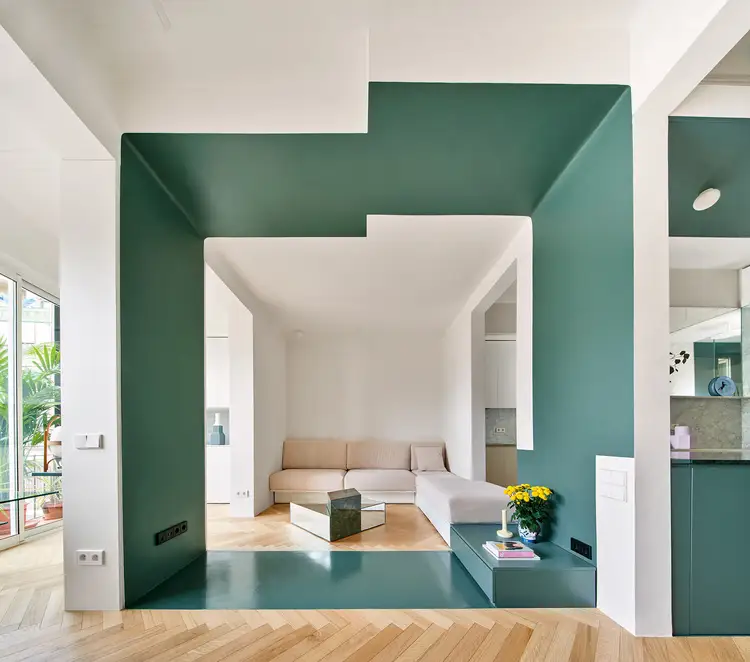
The selection and arrangement of switches and sockets offer a wide range of possibilities to take into account both functional and aesthetic aspects. A rhythmic arrangement of elements breaks the monotony of a surface and creates visual tension. While symmetrical arrangements convey order and coherence, asymmetrical compositions express openness and individuality. By grouping several switches or sockets, functional units can be created that also act as visual accents. For a more discreet appearance, electrical installations can be integrated into wall coverings or niches, making them visually recede into the background. By matching the colour of the wall, switches and sockets can be integrated into the overall look. Alternatively, deliberately contrasting elements can be used as design highlights to set visual points in the room.
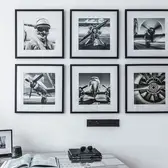
Rhythmic arrangement: Arranged in a regular pattern or grid, individual switches and sockets become a structuring design element.
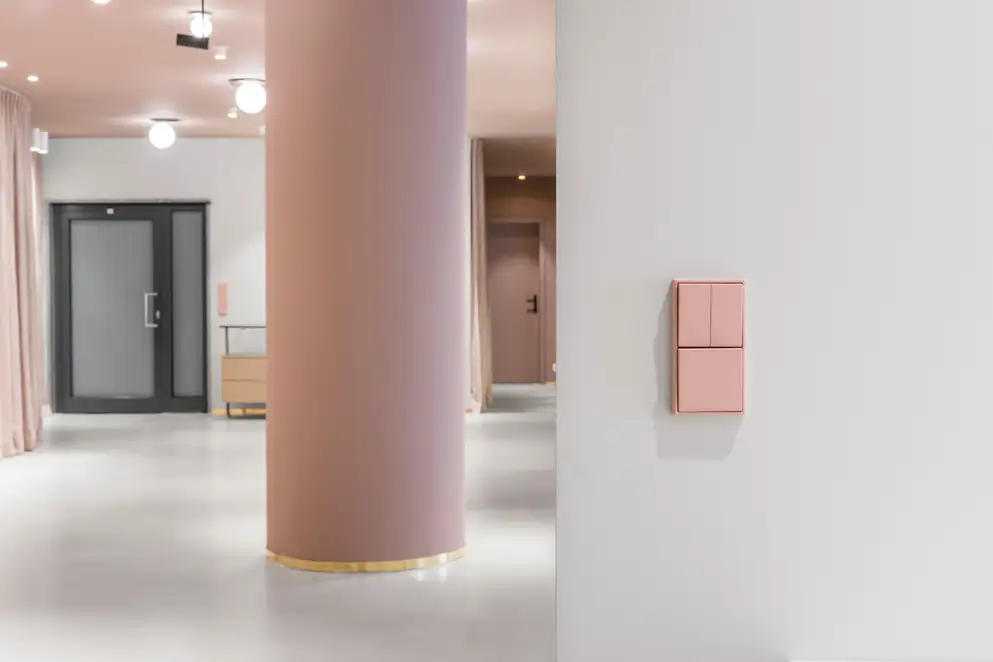
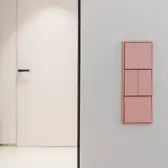
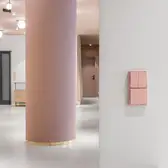
Colour matching: Switches and socket outlets in the same colour as a wall or in contrasting shades blend either strikingly or discreetly into a colourful overall picture.
Grouping: Several switches or sockets are combined to form functional groups that act as a visual unit. The electrical equipment can also form a symbiosis with other design elements.
Theme worlds: Creative shapes and theme-oriented design worlds are supported and highlighted by special switches, creating rooms with individual flair.
Integration in wall elements: The electrical installations are integrated into the wall panelling or wall recesses in order to integrate them visually.
Camouflage: Tone-in-tone, the switches blend in with their background. Concealed installation or discreet placement in furniture is also possible.
Switches and socket strips can act as design elements, and not just as functional components. Colour matching, high-quality materials such as metal, haptic surfaces and integrated lighting create visual interest. Creative arrangements and themed designs highlight the switches, while tone-on-tone concepts and combinations with other elements create design symbioses.
Images:
Apartment TranQuality
© Architecture: KOMPLEMENTI, Image: Magdalena Łojewska VEY Photography
Casa Yurikago
© Architecture: Mas-aqui architecture & interior design, Image: Jose Hevia
Pilgerpension am Jakobsweg
© Architecture: ESTÉVEZeGONZÁLEZ arquitectos, Image: Hector Santos Diez
Office of Emerson Renaldi
© Architecture: planungsbüro i21 mit Julika Frank, Image: Henrik Schipper
Apartment Copper Gal
© Architecture: KOMPLEMENTI, Image: Magdalena Lojewska VEY Photography
Apartment BORRELL
© Architecture: AMOO, Image: José Hevia
Apartment AM 41
© Architecture: Intercon, Image: Intercon
Casa PR
© Architecture: Guillem Carrera Arquitecte, Image: José Hevia
Descargas
Contacto
¿Tiene alguna consulta de prensa? Póngase en contacto con nosotros:
Enviar email










Galería


