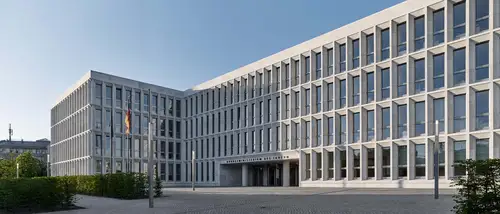
Federal Ministry of the Interior, Berlin
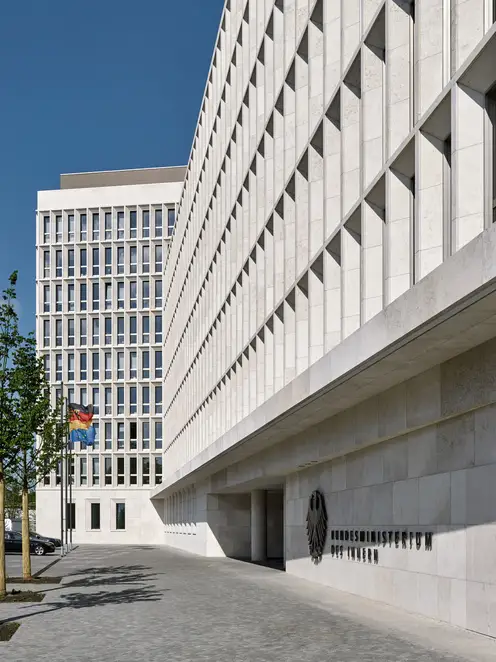
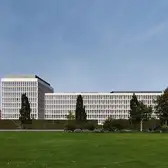
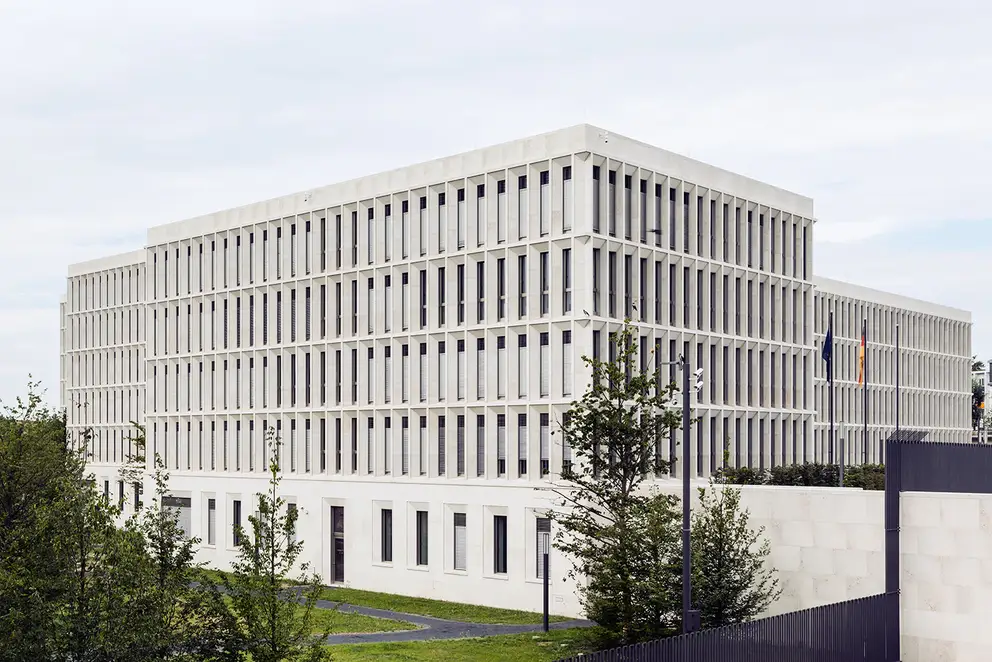
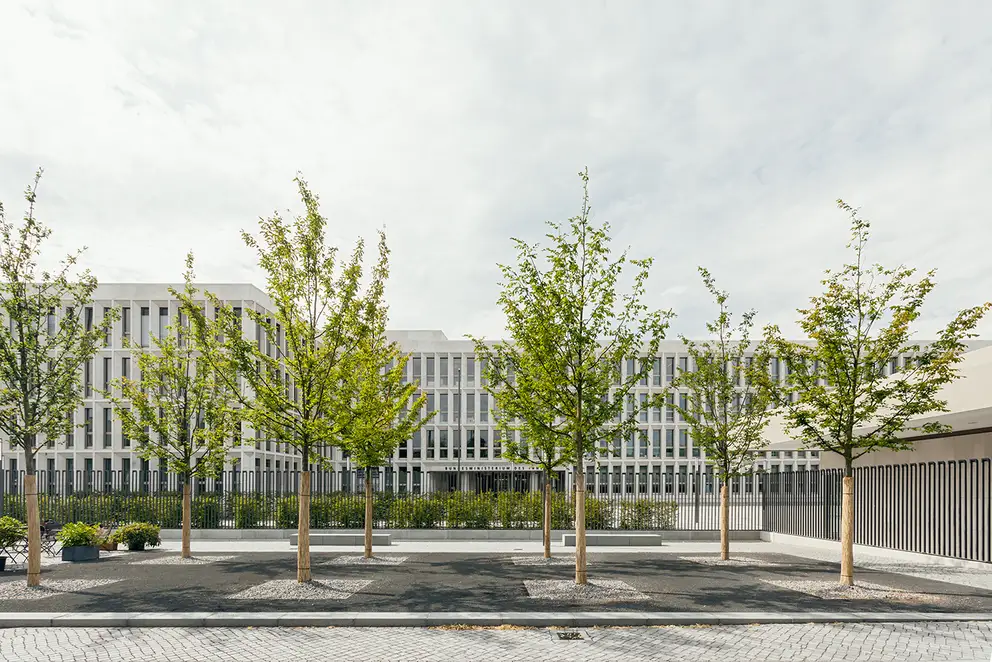
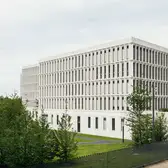
Located at the ‘centre of German politics’, in the immediate vicinity of the Reichstag, the Federal Chancellery and the Paul Löbe Building – the headquarters of the members of the Bundestag –the new building of the Ministry of the Interior (BMI) is yet another seat of supreme federal authority in the Federal Republic of Germany.
As late as April 2015, the Berlin offices of the BMI were spread over three locations in the capital. For reasons of security and economy, it was decided to consolidate them in one building. After a two-stage, international competition, the jury chose the design put forward by the Berlin architectural firm of Thomas Müller Ivan Reimann Architekten.
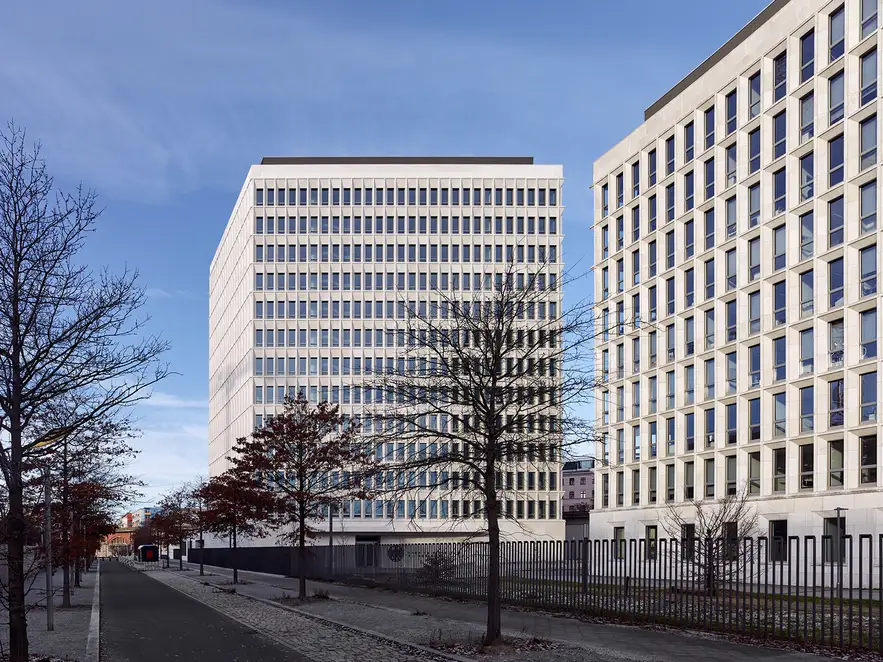
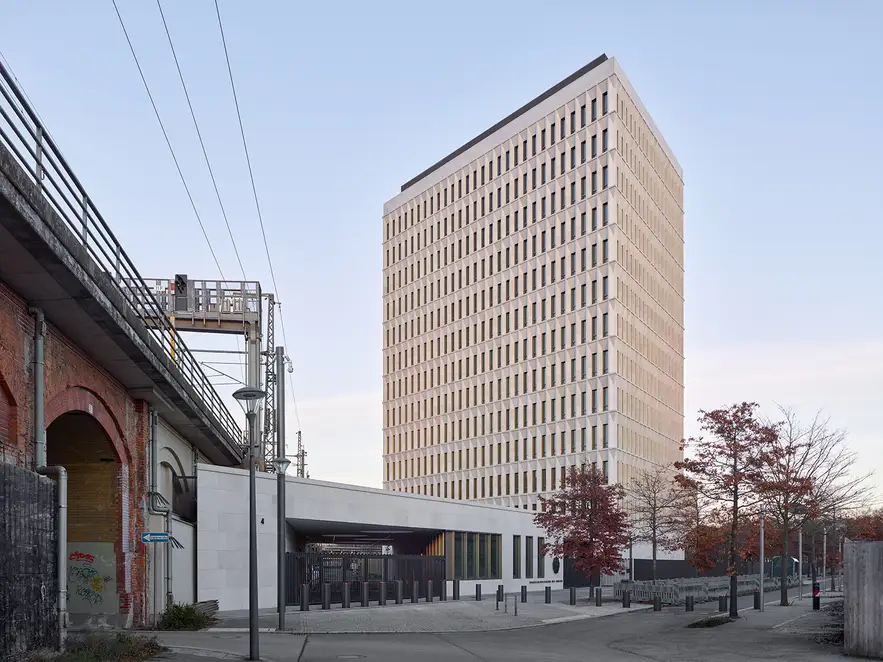
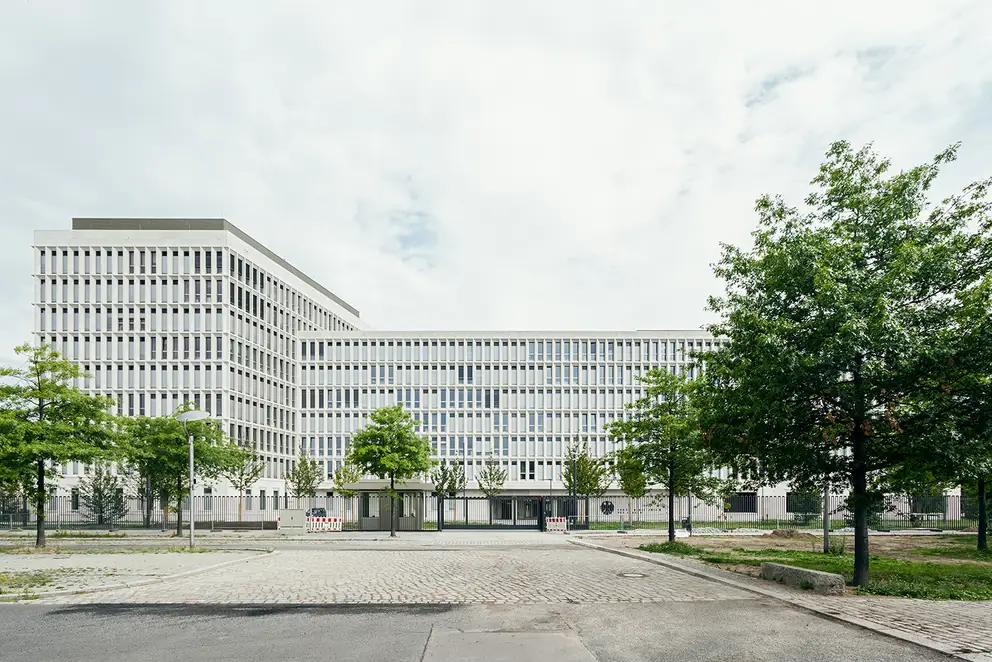
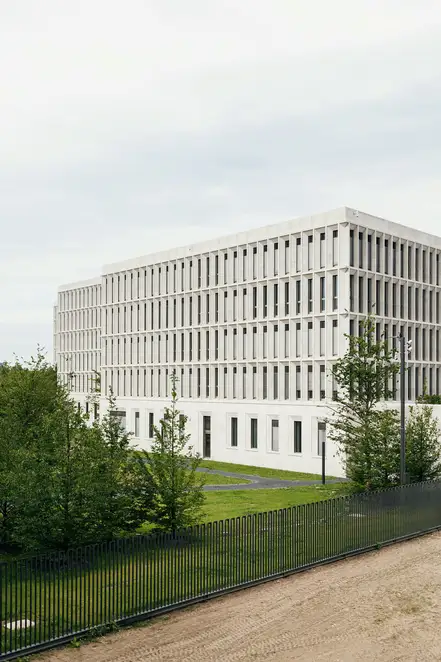
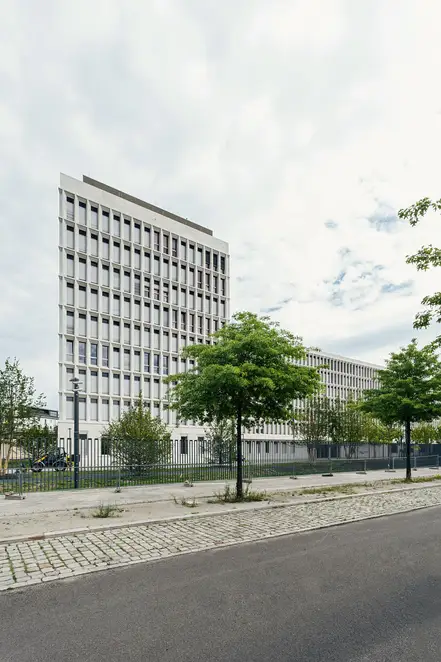
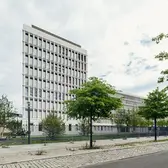
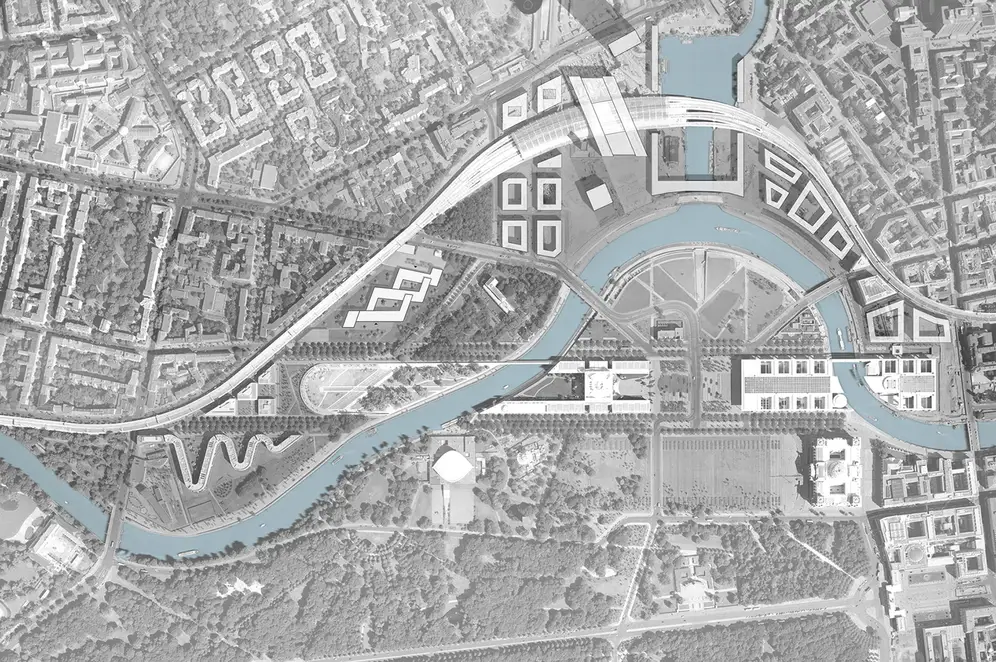
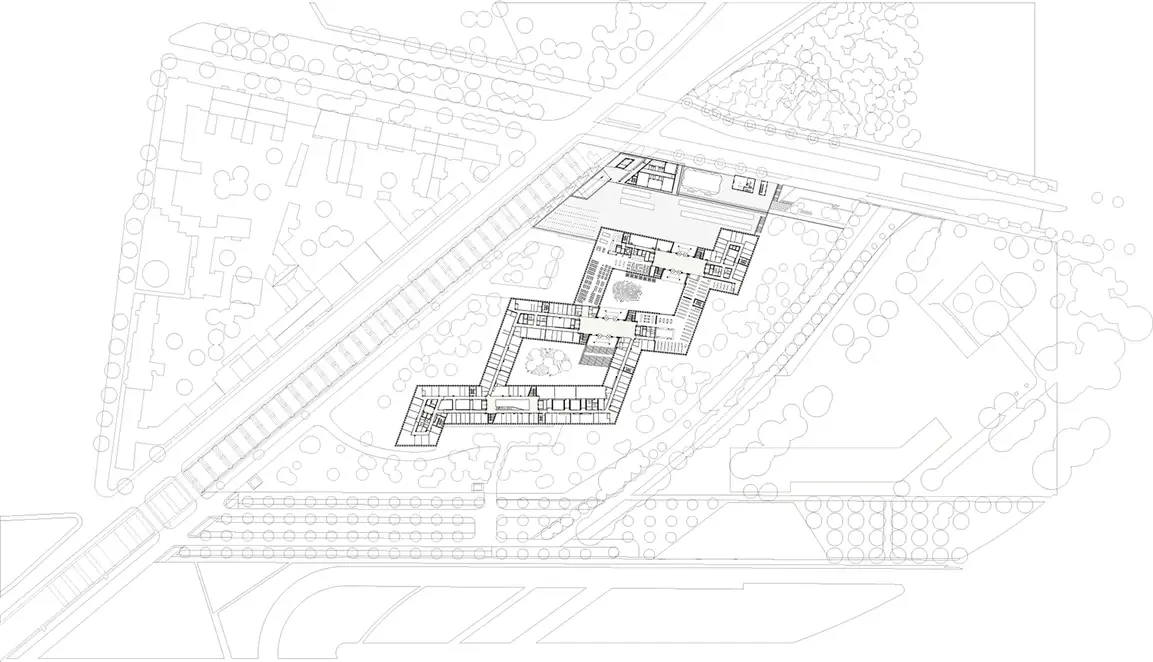
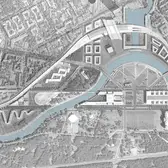
Consisting of three different structures of varying heights, the new BMI building arose at Moabiter Werder, specifically on the north side of the Spree between the Chancellor’s garden and Berlin’s main railway station and nestled against one of the city’s urban railway viaducts. After a move consisting of over 10,000 boxes, some 7 kilometres of files and more than 55,000 books, the new home of the Ministry now offers enough space for all of its 1,400 employees.
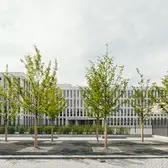
The BMI is one of the most secure ministries in Germany: Surveillance cameras on the façade, windows of bulletproof glass and a fence rising over 2 metres high attest to the importance of the new offices of Interior Minister Thomas de Maizière (CDU).
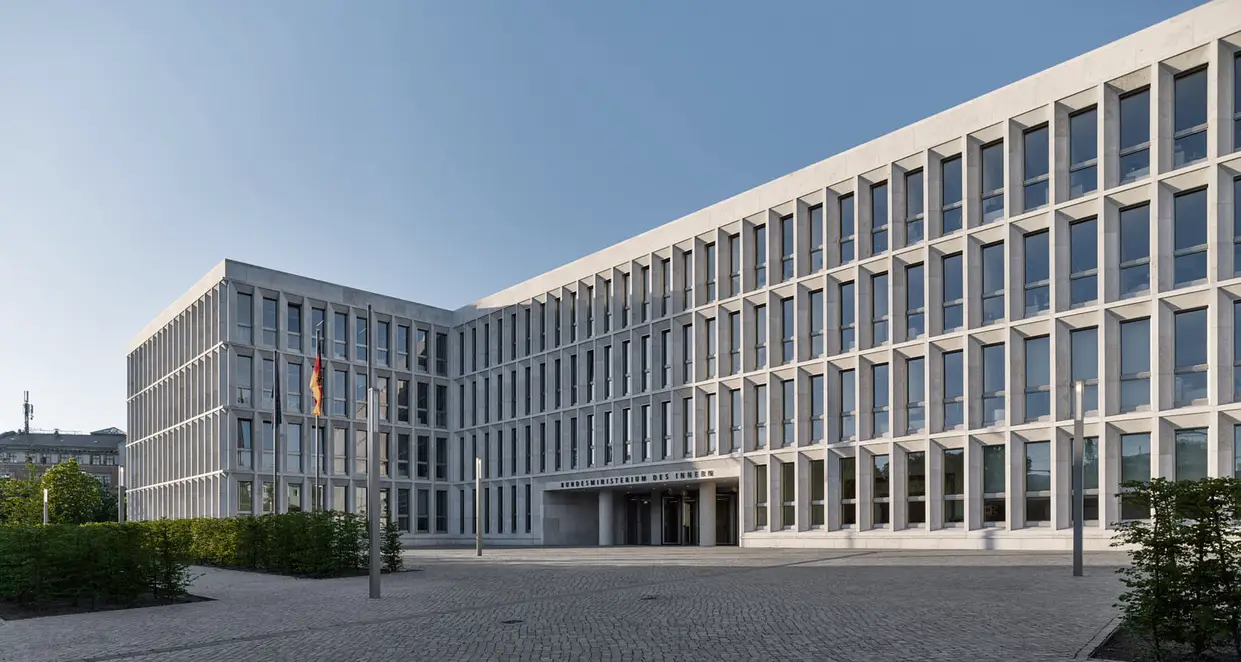
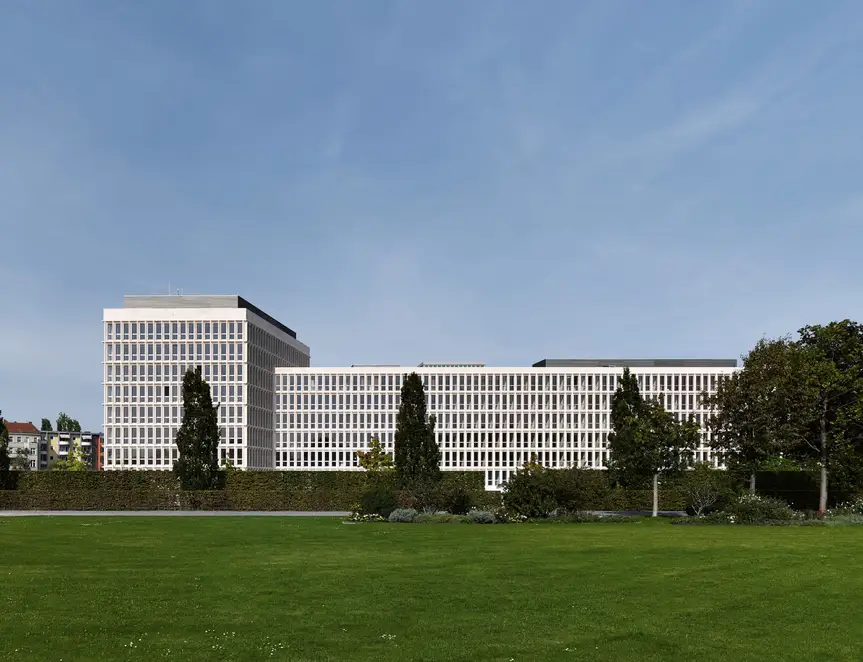
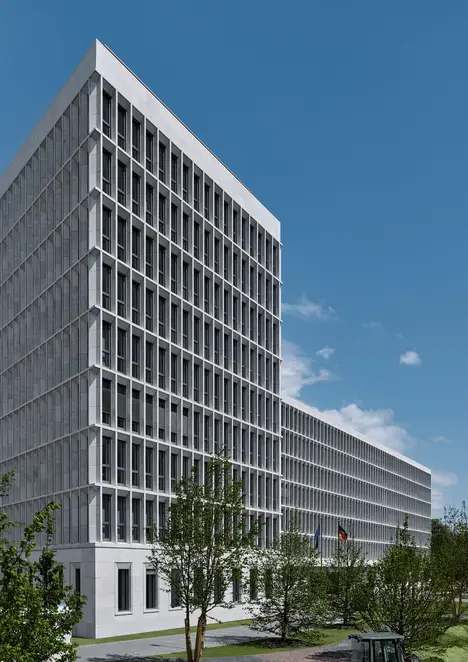
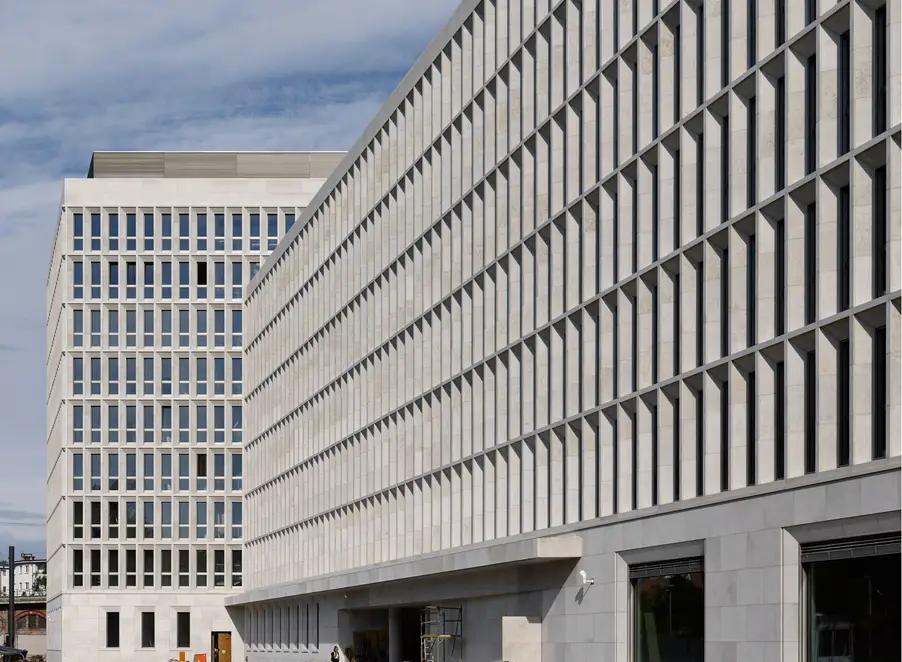
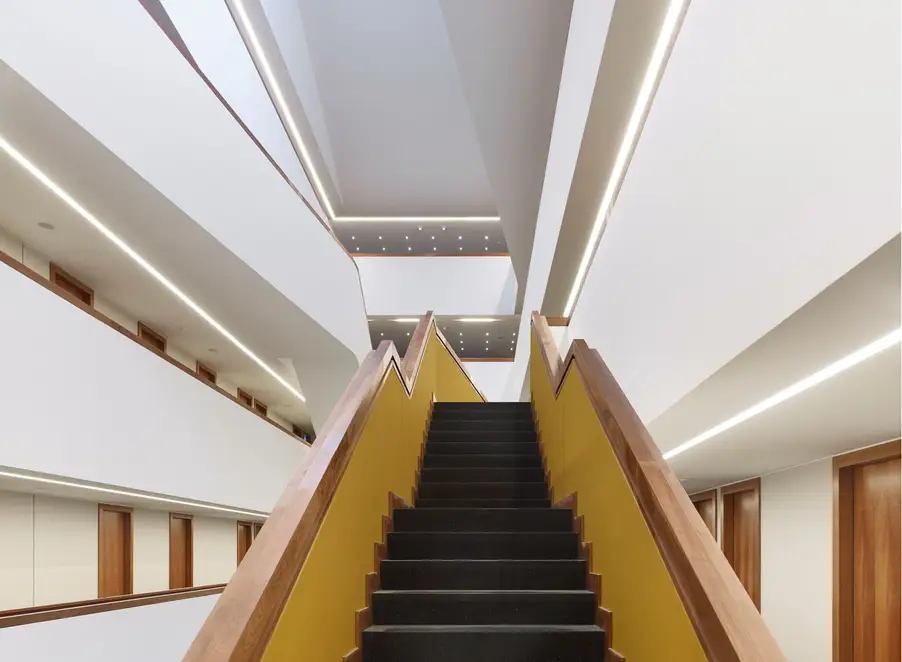
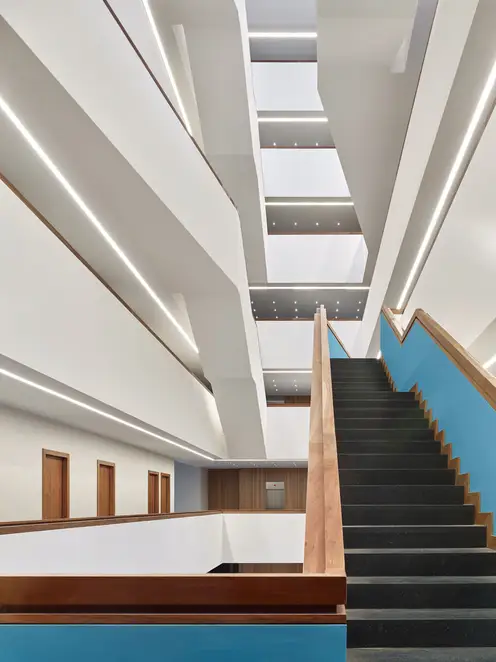
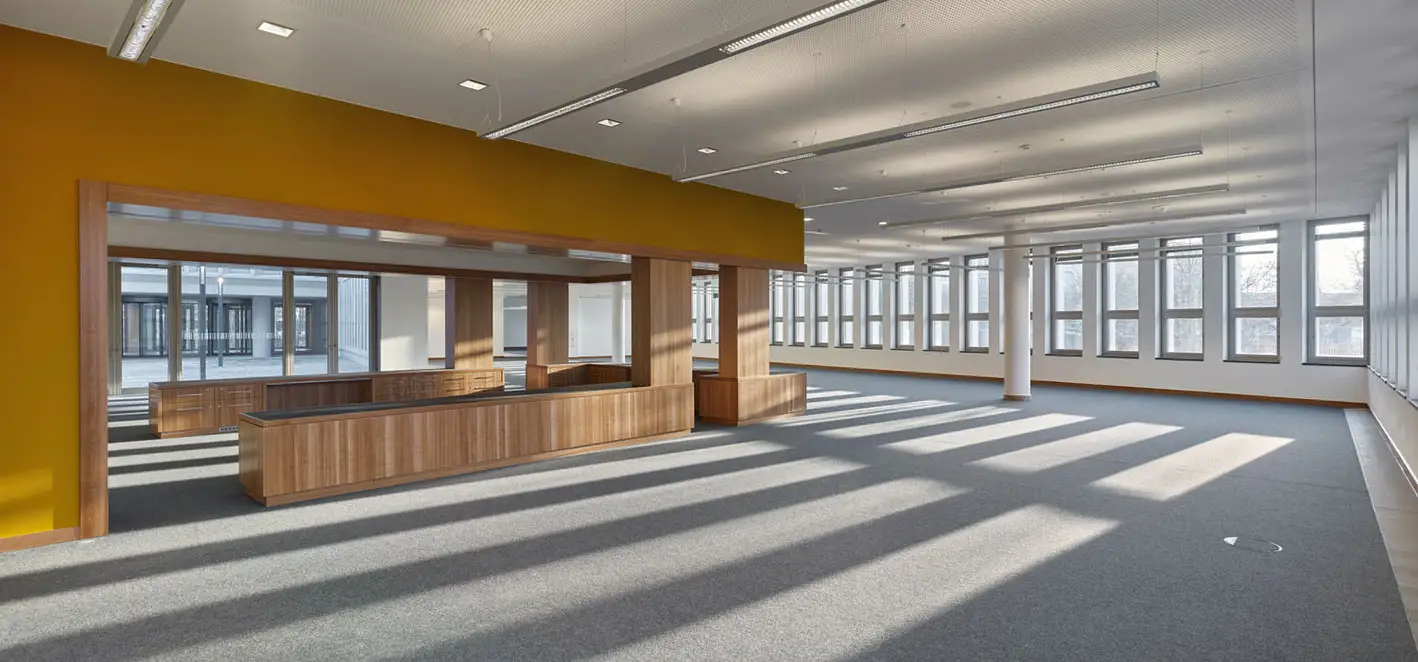
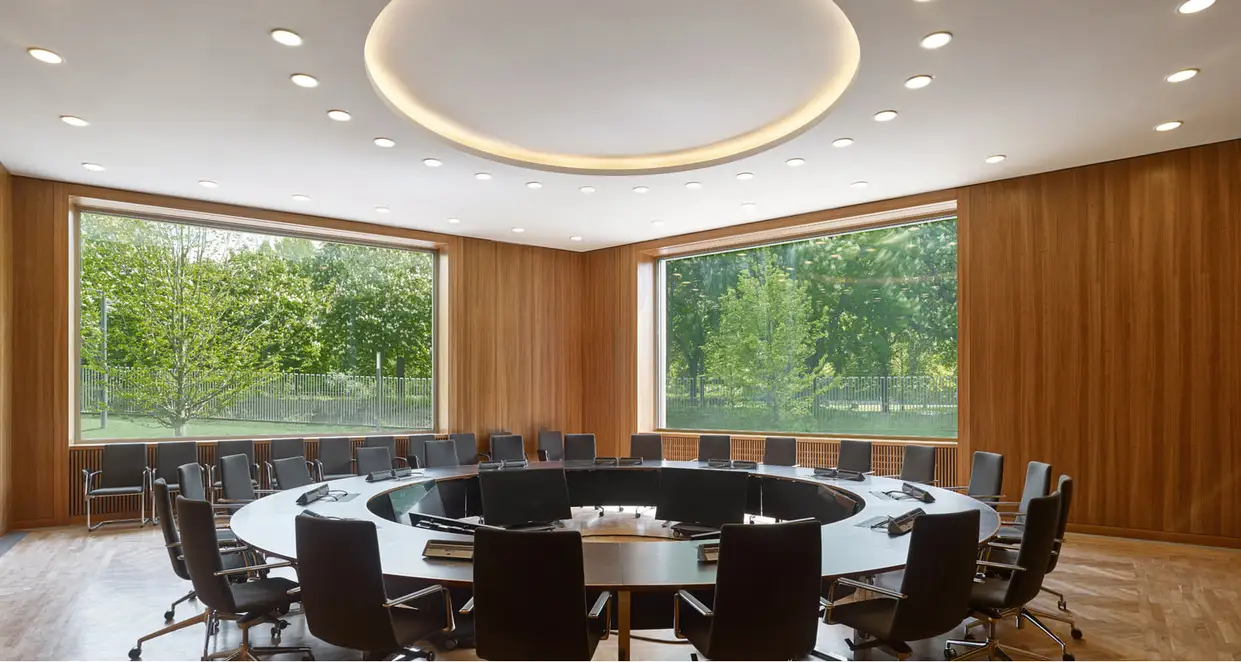
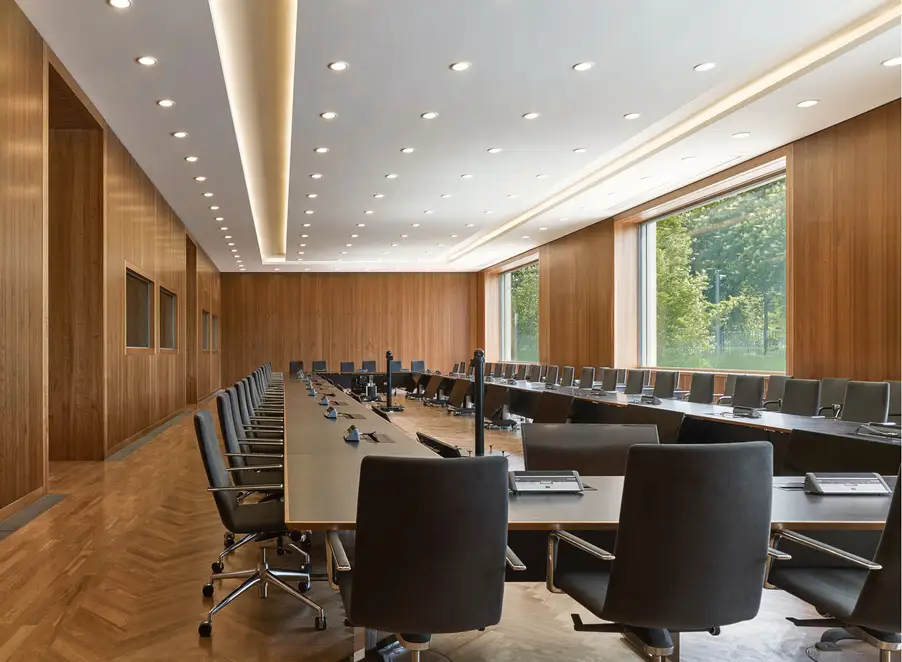
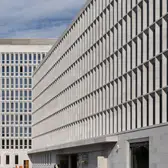
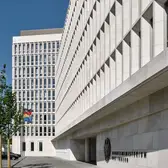
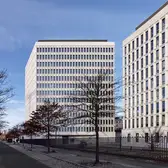
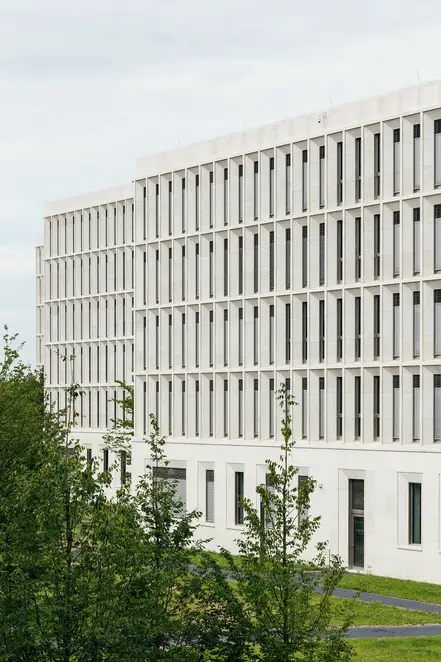
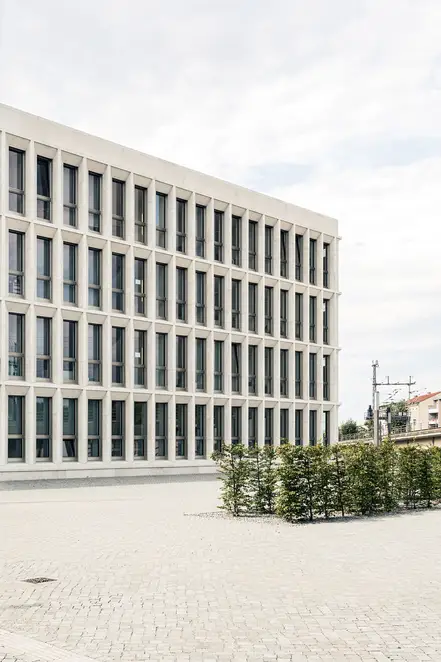
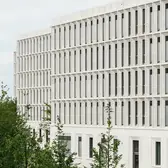
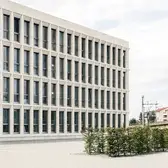
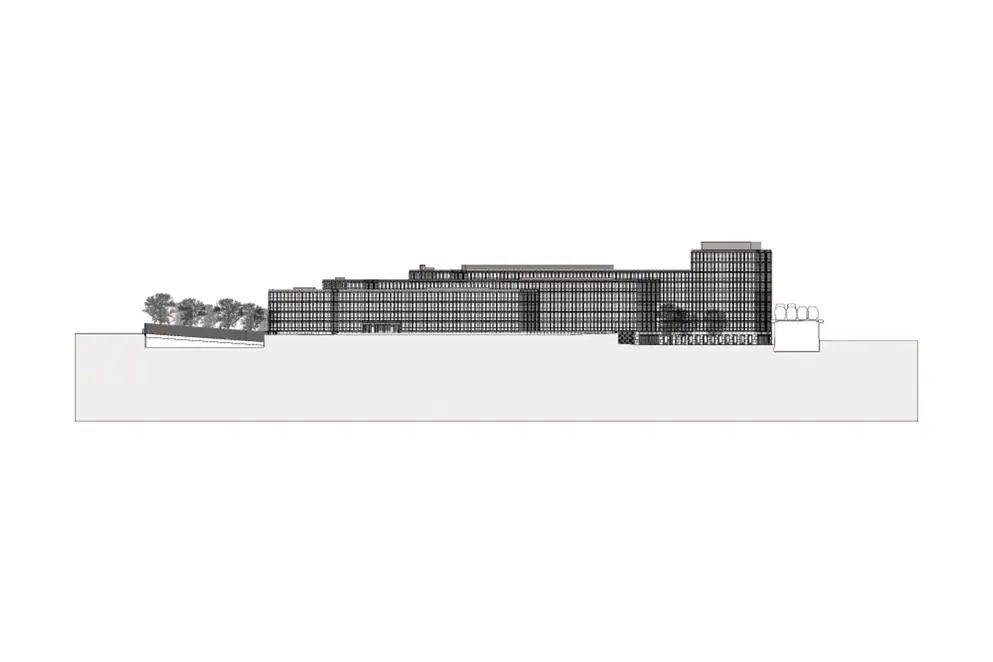
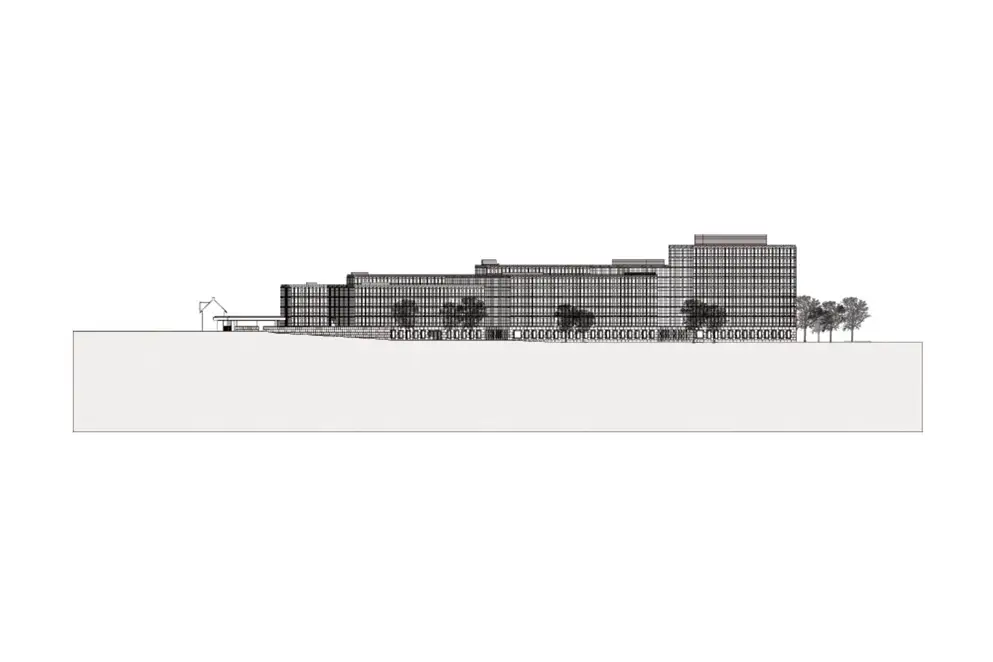
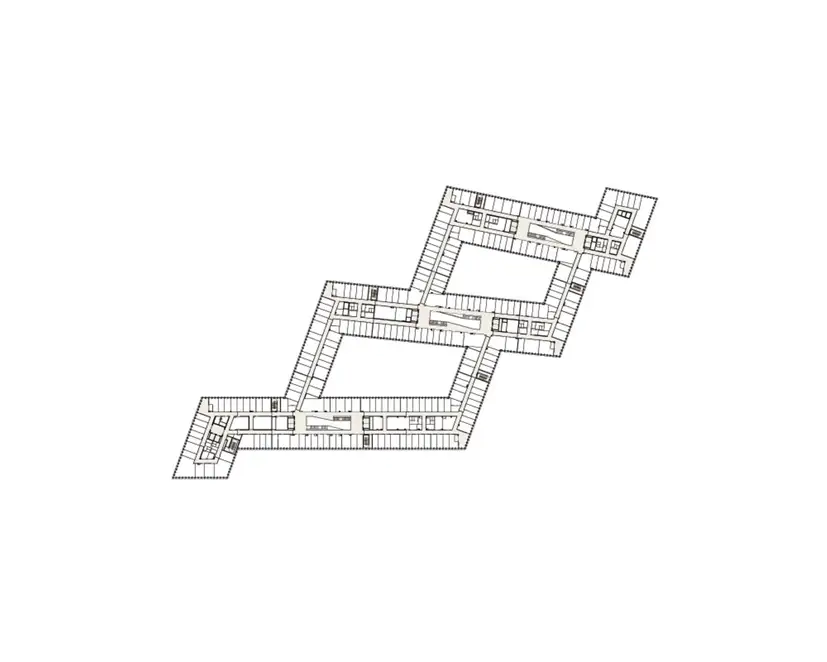
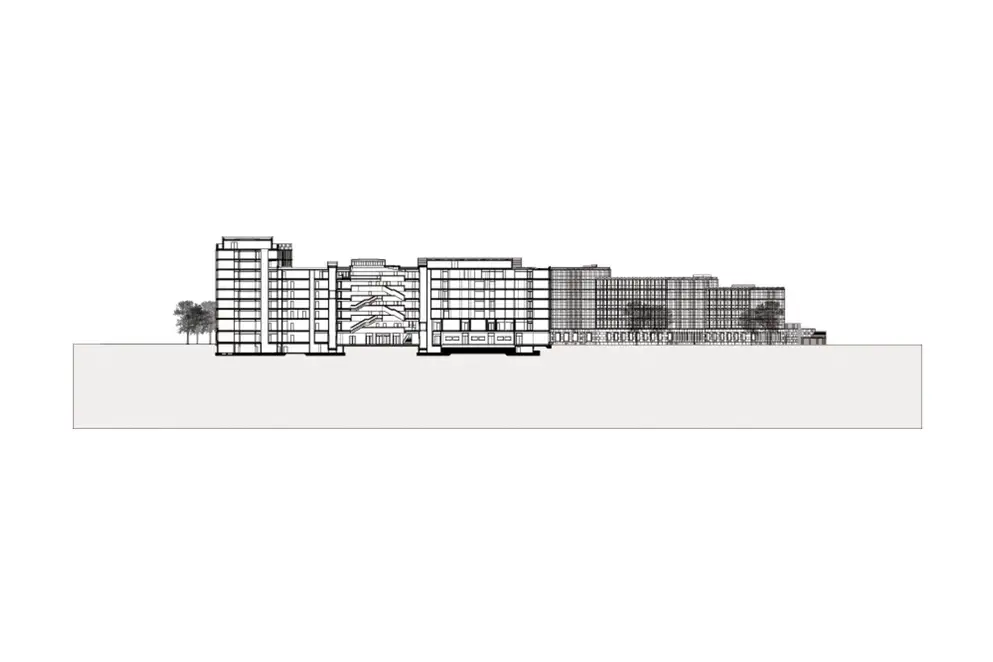
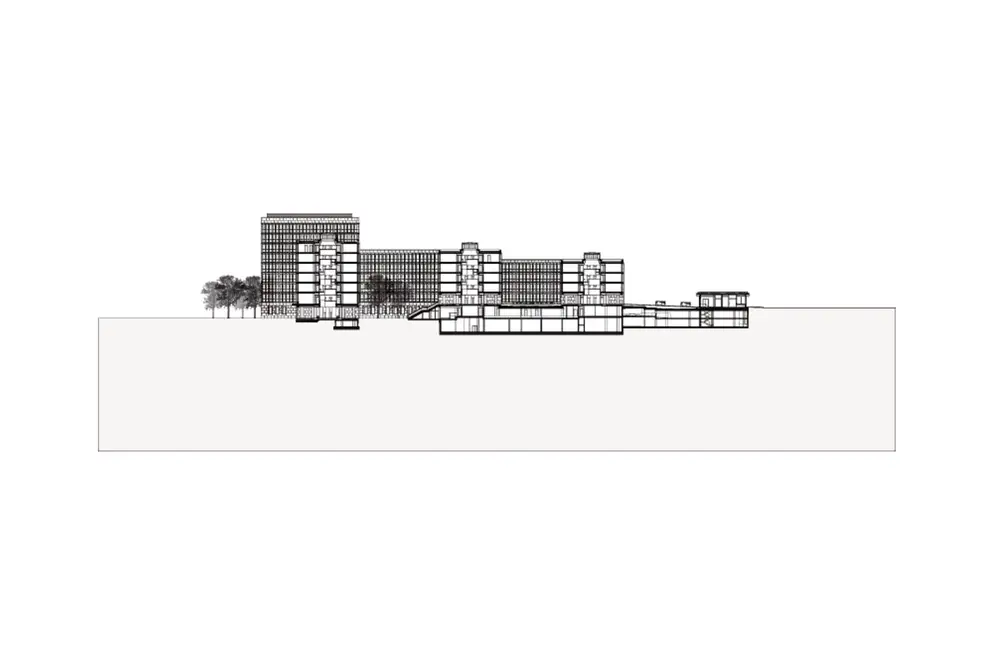
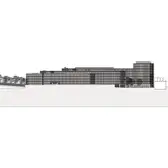
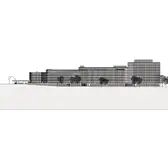
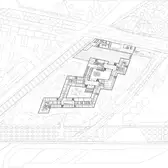
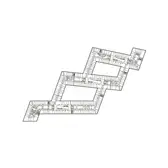
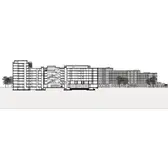
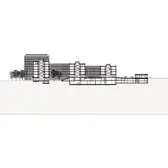
The office complex, with its light, natural stone façade, is composed of three Z-shaped sections with two inner courtyards. From this base emerge the individual parts of the building, from four to six and finally nine storeys in height. The staggering of the structure and its unique footprint are the response of the architects to the irregular shape of the plot as well as to the adjacent railway system and urban spaces. The path through the building is marked by squares, courtyards and atriums. The main entrance for staff and visitors is from the city square. Communal facilities, such as visitor reception, the cafeteria and the library are located at the northern entrance court. The southern courtyard – also known as the “Lichthof” or ‘light well’ – is the point where all paths through the ministry join the local public infrastructure. A conference centre and press room can be found adjacent to the courtyard.
With the construction of the new BMI headquarters, Berlin’s government district has been expanded by another fundamental building. Following in the footsteps of the Reichstag, the Federal Chancellery and the Paul Löbe Building, the Federal Ministry of the Interior also relies on JUNG’s classic LS 990 series of switches. The range’s clean lines and high quality have served it well for over 40 years. The classic design of the switch, with its slim frames, is a perfect fit for any surroundings. Customised labelling of the switches and sockets with the JUNG graphics tool ensures confident operation. Whether abrasion-resistant colour printing, laser engraving or labelling, JUNG products can be freely designed with a wide variety of fonts, text, photos or ornamentation.
When conditions are bit ‘rough’, yet reliable functionality and ease of installation are still required, the JUNG surface mounting system offers sophisticated electrical installations the best of both worlds – without sacrificing appearance. The surface mounted version of the classic LS 990 series gives a particularly elegant touch to installations on concrete or natural stone. The frame design of the surface-mounted caps also means that no additional components are required. With a shatterproof thermoplastic construction, a weather-proof design and the highest possible protection from UV radiation, the splash-proof components of the WG 800 series can be illuminated or finished with integrated labelling. Lighting, blinds, shutters and even atmosphere can all be controlled via push button sensors from JUNG. Upon request, the buttons can also be customised using laser engraving or colour printing.
Completed more than twenty years after the decision to move the capital from Bonn to Berlin, the Federal Ministry of the Interior is the latest in a line of government buildings to open its doors in Berlin. Germany’s domestic policy makers now have a new home on the banks of the Spree and in the heart of Berlin’s government district.
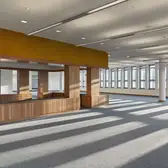
The extension, completed in 2025 as the final component of the complex on Moabiter Werder, was also consistently fitted with LS 990. It continues the architectural style of the existing building and enhances the complex with flexible, contemporary workspaces.
Ville |
Berlin, Allemagne |
|---|---|
Technique |
|
Design |
|
Maître d'ouvrage |
Bundesrepublik Deutschland |
Architecture |
Leistungsphase 1-5 |
Architecture |
Leistungsphase 6-9 |
Concepteur spécialisé |
Winter Ingenieure |
Installateur |
Bauer Elektroanlagen GmbH |












Designs et technologies utilisés
JUNG GRAPHIC TOOL
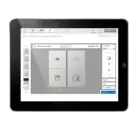
Avec le GRAPHIC TOOL, les interrupteurs deviennent des éléments de design créatifs dans chaque pièce. Les produits JUNG peuvent être personnalisés avec des motifs, photos, ornements ou écritures par impression couleur résistante, gravure laser ou étiquetage.
Enjoliveurs KNX
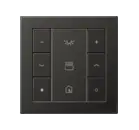
Commande pratique : toutes les fonctions KNX sont commandées par des touches de grandes dimensions. Les enjoliveurs de touche sont disponibles en version avec ou sans flèche. Il est également possible de les faire graver au laser ou d’y faire imprimer une inscription personnalisée.
LS 990, blanc

Le LS 990 dans un blanc pur apporte une touche de clarté et de pureté. La qualité et la forme claire du LS 990 sont éprouvées depuis plus de 40 ans. Le modèle classique de l’interrupteur avec son cadre tout en finesse s’adapte en parfaite harmonie à chaque environnement.
WG 800
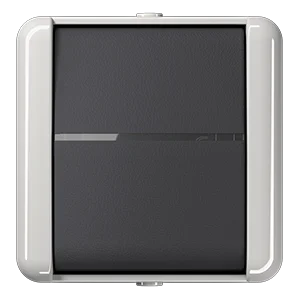
Résistance aux intempéries et aux UV, en thermoplastique incassable : la gamme WG 800, qui dispose d’une protection contre les projections d’eau, est éclairable et inscriptible systématiquement. De plus, avec tout l’espace qu’elle offre pour le câblage, elle constitue une référence en la matière dans les installations électriques professionnelles.
LS 990, acier inox

Avec le LS 990 en acier inox, l’élégance s’invite dans un environnement raffiné. La combinaison du métal de qualité supérieure et du boîtier clair de l’interrupteur classique JUNG complète parfaitement le visuel.
LS 990 en saillie
L’interrupteur classique de la gamme LS 990 en version en saillie fait particulièrement bonne figure sur du béton apparent ou de la pierre naturelle. Les boîtiers en saillie sont déjà munis d’un cadre de finition. Par conséquent, aucune pièce supplémentaire n’est nécessaire.