GenerationenRaum - a new way of living for all ages.
The GenerationenRaum represents a new approach to living: intergenerational, well thought-out and adaptable. It focuses on solutions that combine comfort, safety and aesthetics - for people at every stage of life. Rather than offering standardised solutions, this concept provides answers that cater to individual needs of each person, regardless of their age or physical requirements.
Accessibility begins in the planning stage
How can I design my home to be both barrier-free and modern, especially with ageing and possible limitations in everyday life in mind? Good design should be a matter of course when planning accessible spaces. However, the focus is often placed solely on the functional aspects of accessibility, which is correct and required by law. However, ignoring aesthetics entirely is an oversight because, just as people with different physical abilities have a right to functionality and accessibility, they also have a right to individuality and well-being.
How can building technology be designed to be inclusive, functional, future-oriented and aesthetically pleasing? Inclusion means far more than just removing barriers. It means participation for everyone, regardless of their physical or cognitive abilities. Modern building technology plays a central role here, creating the technical requirements for a comfortable, safe and self-determined life at all stages.
Technology with a vision
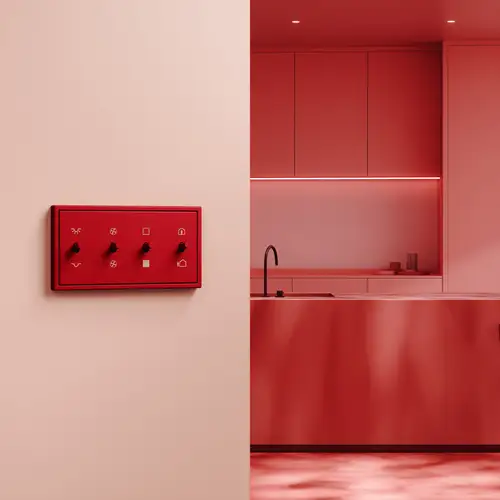
When it comes to building technology, people often prioritise efficiency, security and automation — all of which are essential aspects. However, when technology is considered inclusively, solutions are created that go beyond mere functionality. The aim is to design technology that can be operated intuitively and is visually accessible, offering flexibility for different needs. This applies to door controls, lighting systems, heating controls and emergency call systems, for example. Through targeted design, visual feedback, acoustic signals and barrier-free control panels, technology becomes a bridge, not an obstacle.
Added value through design and simplicity
The same applies to building technology: combining intelligent functions with an appealing design increases not only user-friendliness, but also acceptance. A clear, modern design of operating elements that are easy to understand at first glance and blend harmoniously into the architectural environment conveys professionalism and consideration. Accessibility begins in the planning stage and extends beyond door width. A well-thought-out system takes into account features such as contrasts for visually impaired people, voice control for people with motor impairments, and reduced menu navigation for better overview.
Inclusion as an attitude
Inclusive technology is not a special case, but an expression of an inclusive attitude. It is forward-looking because, in an increasingly diverse society, flexible and adaptive solutions are becoming ever more important. Inclusive building technology sends a clear message: Thought has been put into this. Everyone is welcome here. Whether in private homes, companies, schools or public institutions, it fosters trust, security and equality.
Technology with a vision
When it comes to building technology, people often prioritise efficiency, security and automation — all of which are essential aspects. However, when technology is considered inclusively, solutions are created that go beyond mere functionality. The aim is to design technology that can be operated intuitively and is visually accessible, offering flexibility for different needs. This applies to door controls, lighting systems, heating controls and emergency call systems, for example. Through targeted design, visual feedback, acoustic signals and barrier-free control panels, technology becomes a bridge, not an obstacle.
Added value through design and simplicity
The same applies to building technology: combining intelligent functions with an appealing design increases not only user-friendliness, but also acceptance. A clear, modern design of operating elements that are easy to understand at first glance and blend harmoniously into the architectural environment conveys professionalism and consideration. Accessibility begins in the planning stage and extends beyond door width. A well-thought-out system takes into account features such as contrasts for visually impaired people, voice control for people with motor impairments, and reduced menu navigation for better overview.
Inclusion as an attitude
Inclusive technology is not a special case, but an expression of an inclusive attitude. It is forward-looking because, in an increasingly diverse society, flexible and adaptive solutions are becoming ever more important. Inclusive building technology sends a clear message: Thought has been put into this. Everyone is welcome here. Whether in private homes, companies, schools or public institutions, it fosters trust, security and equality.
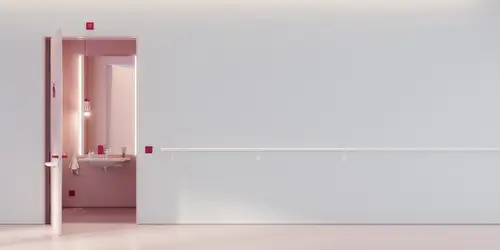
How can intergenerational, barrier-free living be achieved in style?
Our living concepts combine age-appropriate technology with attractive design to provide greater comfort, security and autonomy at every stage of life.
Product solutions
Safety and comfort
Accessibility is an integral part of forward-thinking planning. It provides the foundation for a home that is safe, comfortable and independent in all phases of life, whether it is a home for senior citizens or a facility for people with dementia. It's not just about standards and functionality; design is important too. Building technology combines intuitive operability with a clear, high-quality design. Lighting, shading, temperature and door communication can be controlled in such a way by building technology that they remain accessible for different needs — whether visual, haptic or automatic. Well-thought-out solutions reduce complexity, provide orientation and noticeably increase suitability for everyday use. The result is a living environment that supports rather than restricts, in which function, aesthetics, and ease of use complement each other naturally.
Automation that reduces barriers
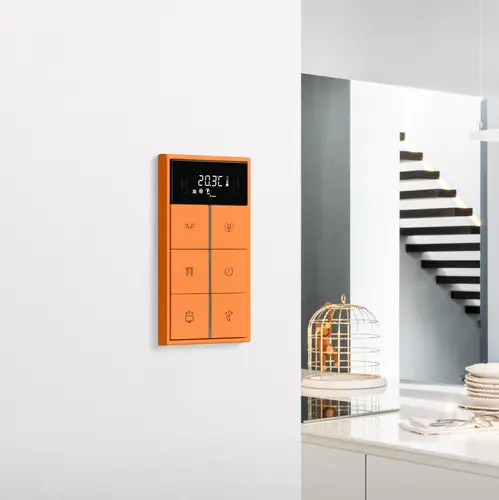
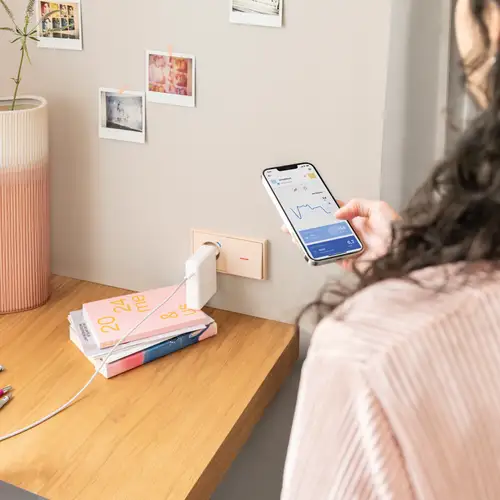
The solutions from JUNG make building technology an active supporter in everyday life. Lighting, shading, room temperature and door communication can be intelligently networked and automated to suit individual needs and daily routines. For barrier-free living, this means less manual intervention, greater convenience and enhanced security. Functions such as central controls, scenes and time-dependent sequences can take over recurring tasks, providing noticeable relief in remodelled homes for the elderly, clinics, dementia residential groups and care homes. All applications can be operated intuitively at any time via push-button, app or automatically in the background thanks to intelligent networking. This creates a living environment that adapts flexibly and provides orientation. The technology provides unobtrusive support in the background and makes accessibility a matter of course in everyday life.

Easy to use for all generations
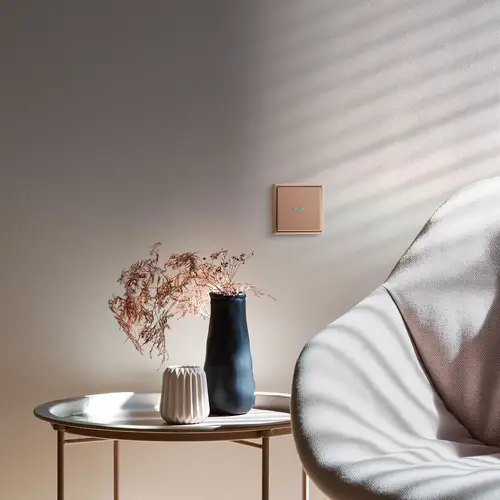
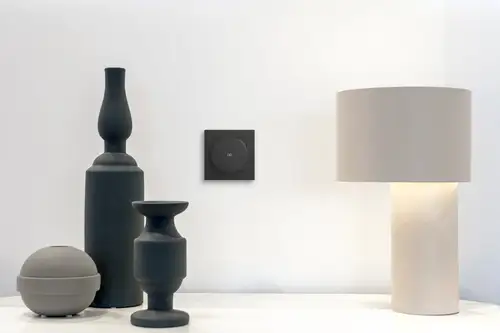
Our solutions are designed to be intuitive in everyday life, regardless of age or individual needs. Clearly structured control elements, easily recognisable contrasts and labelling with straightforward symbols make navigation easier and functions easier to understand at a glance. Whether it's lighting, shading or room temperature, you can control it via a push-button, an app or automatically in the background, and it adapts to the needs of different user groups. Voice control and customisable elements also simplify operation, particularly for individuals with limited mobility at home or in care facilities. The result is an operating concept that simplifies processes, provides security and promotes independence in everyday life.


Reducing barriers.
Securing the future.
Subsidies support the conversion of homes to make them more suitable for older people, providing greater comfort and independence.
Plan your home - inclusive, comfortable, smart
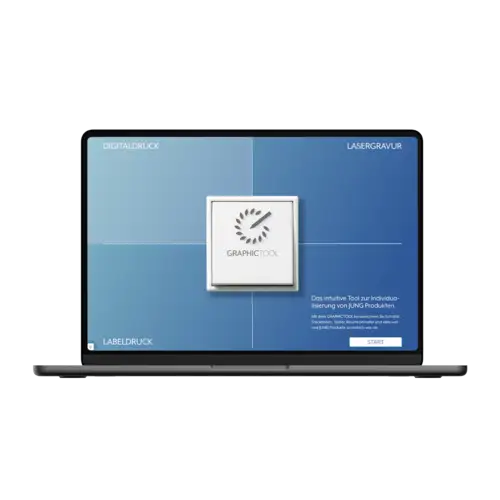
Using the JUNG configurators and JUNG GRAPHIC TOOL, you can design a home that is both accessible and comfortable for people of all ages. Whether you are a young family, a working professional or have specific requirements, JUNG offers tools that combine planning, technology and comfort:


FAQ
- Modern technology can be integrated in a way that is both unobtrusive and aesthetically pleasing, while offering comfort and accessibility.
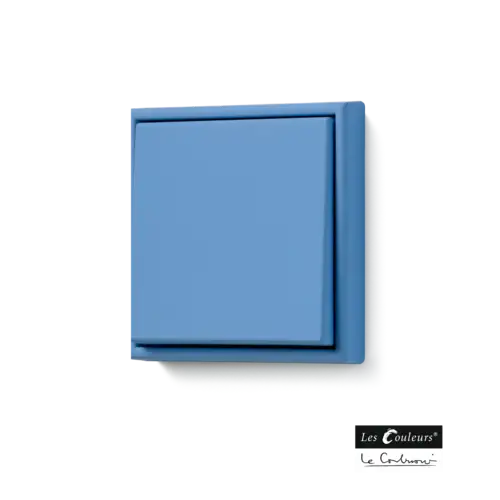
- When designing materials and colours, pay attention to contrasts (e.g. for switches and door frames), and choose high-quality, aesthetically pleasing surfaces and shapes.
- Yes, there are large-area switches that can also be operated using the whole hand, forearm or even an object.
- Contactless or automatic light control (motion sensors) is helpful if fine motor skills or strength are limited.
- Additional convenience can be provided by voice control, app solutions or technology via centralised smart home systems.
Yes, some measures can be "retrofitted" or require only minor structural changes, e.g:
- Converting or raising sockets/switches to lower accessible heights.
- Installation of orientation lights.
- Attaching grab rails to wall surfaces that are reinforced.
- Use of wireless sensors or Smart Home components that work without complex cable runs.
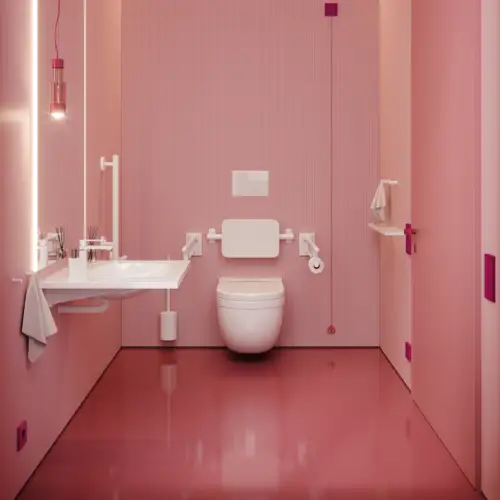
- In an emergency, it is crucial that help arrives quickly. JUNG offers a wide range of solutions to ensure the safety of your property. The emergency system set, for example, is a well-thought-out solution for calling for help in disabled toilets or bathrooms.
- Lighting control or motion detectors help to illuminate dark areas immediately, making paths safer.
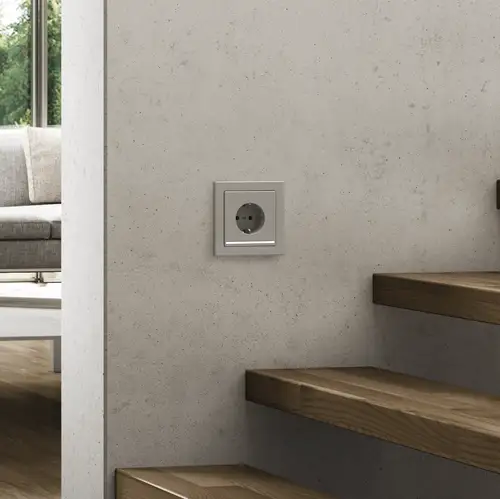
- Sockets with orientation lights are helpful.
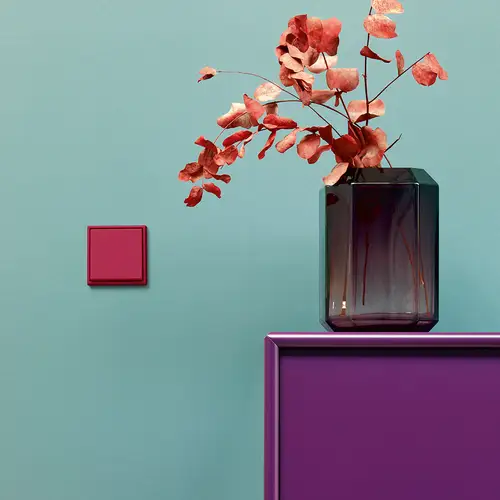
- Contrasts: Switches, door frames and furniture edges should stand out in colour - this helps people with visual impairments.
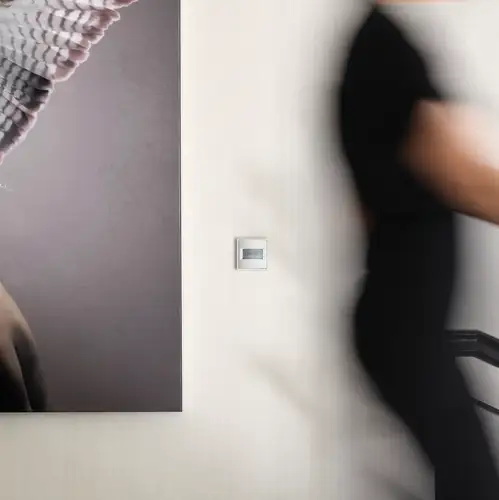
- Automatically controlled lighting (e.g. motion detectors) ensures that lights switch on when you approach a room.
- For many retrofits such as sockets, switches, orientation lights and grab rails, an experienced electrical contractor is sufficient.
- It is worth commissioning specialists with experience in barrier-free construction - they know the standards and can implement them safely.
- Yes, many things are affordable - especially smaller measures such as automatic switches, orientation lights or coloured switches.
- There are funding programmes: e.g. KfW funding for accessibility in your own home.
- It helps to bundle measures and realise them step by step so that costs remain predictable and subsidies are used optimally.
Conclusion
JUNG systems create rooms that are comfortable today and warrant safety tomorrow. Technology is not an obstacle, but a creative force: it makes accessibility a matter of course and rooms actually usable - for every situation, every user and every age.