Building automation with KNX: smart functions, simple operation and added value for your home
The modern world is all about efficiency and convenience - and that doesn't stop at home. With KNX, the globally recognised standard for building automation, residential and commercial buildings can become smarter than ever before. But what is behind the term KNX and what does it mean for building owners and end users? In this text, you will learn everything you need to know about functions, costs, effort, security, operation, visualisation, value enhancement and networking in building automation with KNX.
What is KNX?
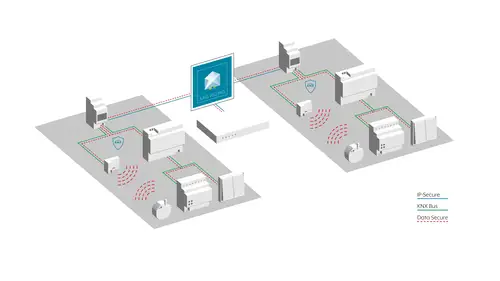
KNX is a global standard for home and building automation that enables various systems such as lighting, heating, blinds, ventilation or security systems to be networked and centrally controlled. It offers a reliable solution for modern Smart Homes or office buildings by enabling the automation of everyday tasks. Thanks to the open standard, a wide variety of manufacturers can offer their products on a KNX basis, giving you a width of choice and independence in the long term.
The functions of KNX
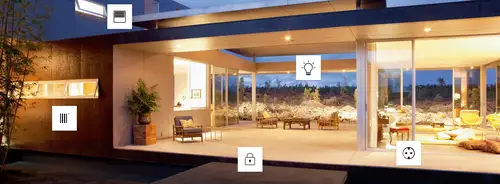
The key strength of KNX lies in its versatility and flexibility. You can automate and network almost all electrical systems in a building. Here are some of the most popular applications:
Lighting: With a KNX system, lighting can be controlled automatically - whether to react to movement or to create scenarios, such as dimmed light for the evening.
Heating and air conditioning: Automatic adjustment of the room temperature per presence or weather conditions ensures greater comfort and energy efficiency.
Blinds and shutters: Time-controlled control or reaction to sunlight - this not only saves energy, but also protects furniture from direct sunlight.
Security: Motion detectors, smoke detectors and alarm systems can be integrated via KNX and provide a comprehensive security concept.
Multimedia: Music and TV systems can be integrated into the system and controlled centrally.
A KNX system not only makes your home more efficient, but also safer and more comfortable.
A KNX system not only makes your home more efficient, but also safer and more comfortable.
Costs of a KNX system
How expensive is a KNX system? That depends on the size of the project and the desired functions. Basically, there are costs for the hardware (switches, sensors, actuators, control devices), installation and programming. For more complex projects or larger buildings, the costs can be correspondingly higher than for a detached house.
An important consideration is the long-term added value: a well-planned KNX system saves energy, reduces operating costs and increases the value of the property in the long term. Smart energy-saving solutions are more in demand than ever, especially in times of rising energy costs and the trend towards greater sustainability. An initial cost estimate is provided by configurators that estimate the costs in a similar way to car manufacturers.
Installation effort
In contrast to simple smart home solutions, which you may even be able to install yourself, installing a KNX system is somewhat more complex. As KNX works via a hard-wired bus system, the wiring in the house must be specially planned and implemented.

Further contributions




KNX security

Simple operation and visualisation
A central goal of building automation with KNX is simple operation. Once set up, you can realise KNX control intuitively via KNX push-buttons, touch screens or mobile apps.

Increase in the value of the property

Networking with KNX RF
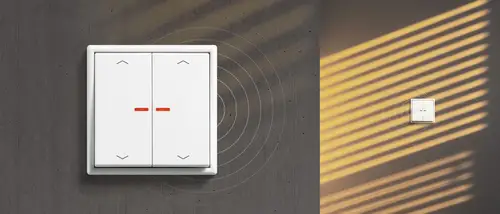
In addition to the classic, wired variant, KNX also offers radio solutions, known as KNX RF (radio frequency). These are particularly useful when it is not possible or too costly to lay new cables. With KNX RF, you can also expand existing systems at a later date, for example with wireless control of lights, blinds or thermostats. The combination of cable and radio technology makes the KNX system extremely flexible and adaptable.
Conclusion
With a KNX system, you can bring the latest smart home technology into your home. It not only offers more convenience and security, but also helps to use energy more efficiently and save costs in the long term. The ease of operation and the ability to network various devices in particular make KNX the ideal solution for building owners who rely on smart technology. The KNX system offers added value for every property, whether through better energy efficiency, flexible networking or increased living comfort. So anyone building or renovating today should consider the option of a KNX system - it is an investment that pays off in many ways.