Vagabundo Tiny House, Munich | Germany
The Tiny House from Vagabundo Living is a flexible reinterpretation of a small, mobile house for modern living in a small space. The architectural concept is characterised by a simple, minimalist design, high-quality fittings and maximum functionality. The Vagabundo House is available in three versions: as Vagabundo mini with only 15 m² of living space for temporary living such as a holiday apartment; as Vagabundo comfort with bedroom, bathroom, kitchen and living room in 34 m²; and as Vagabundo flex with two complete floors including living area with kitchen, sleeping and work area and a fully equipped bathroom. Despite the reduced living space, the comfort and flex models are designed as a permanent place to live and offer maximum convenience in the minimum space. Since October 2022, the Vagabundo flex show house has been in the English Garden in Munich. All Vagabundo types can be transported by lorry on a swap chassis. At 2.55 metres wide, they are permitted as a normal load for road transport, thus reducing transport costs and only requiring a few hours to make the houses mobile again. For maximum mobility, they are used standing on the transport frame, while for longer durations at one place they can be set up raised on supports or placed at ground level using a crane.
The Tiny-House movement is a social and architectural phenomenon that has gained increased momentum in recent years. Minimalist living in a small space has gained popularity as a reaction to the increasing consciousness of environmental issues as a reaction to the current consumer behaviour and the desire for a simpler life. The three partners Michael Leitner, Luca Knipp and Andreas Müllner, who met during their architecture and industrial engineering degrees, have realised their personal ideal of the housing of the future with Vagabundo: minimalist and flexible, connected to nature and not specific to one location. Which is where the name "Vagabundo" comes from – "the itinerant or vagrant, freedom and free-time rich“.
The flex is the largest and most versatile house type in the Vagabundo range. An installed lifting system allows a second floor to extend up. This stays down for transportation so that the permitted transport height of four metres is not exceeded. At the site, the mobile house is connected to the local services. All the necessary house technology such as fuse boxes, water supply and water heater is found in a technical room accessible from outside. Underneath this technical centre there are also the connections for waste and fresh water and the power supply.
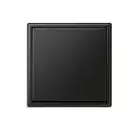
The interior design is characterised by extensive use of wood, carefully conceived fitted furniture and simple lighting solutions. Oak parquet flooring, LED light strips and comfortable textiles provide cosiness despite all the simplification. A generous ambience arises from an open design and the compact room design. The proximity of nature can be felt continuously and terraces create additional space outside. The high-quality technical equipment also follows the overarching concept of multifunctionality with minimalist design, including the LS 990 socket from JUNG with integrated USB ports. All kitchen and bathroom taps and light switches are kept in a matt black in contrast to the natural materials and light colours of the interior design. The LS 990 switch range in matt graphite black integrates itself ideally into this simple design.
The decision to live in a Tiny House is characterised by the desire to leave behind the smallest possible environmental footprint, along with the possibility to lead a simple and minimalist lifestyle. Even though Tiny Houses are certainly not the right choice for everyone, they offer a convincing alternative to traditional living typologies.
Place |
München, Germany |
|---|---|
Design |
|
Architecture / Interior design |
Vagabundo Living GmbH |