0

Green Investment: How Energy-Efficient Solutions in Buildings Generate Financial Benefits
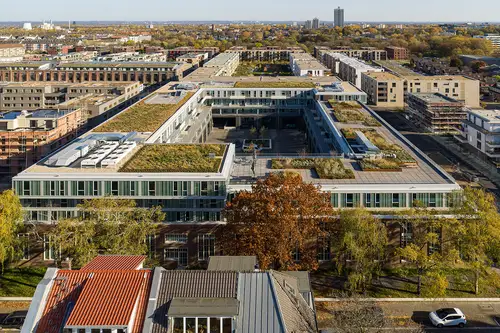
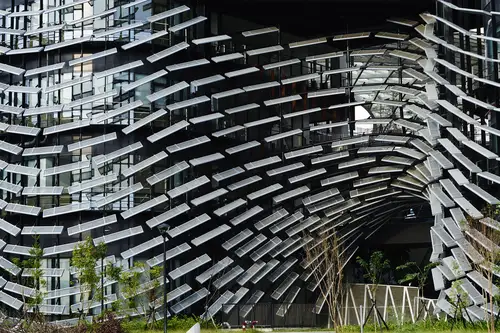
Clouth 104, Cologne, Germany. © Architecture: LEPEL & LEPEL Architekt, Photo: HG Esch

Different energy-efficient solutions for green buildings:

Architectural elements:
Kinetic facades 
Windows  
Roofing 
Construction materials

Technology: 
Integrated daylight harvesting & occupancy lighting 
Demand-controlled HVAC system with smart zoning 
Solar integration, battery storage & smart load management 
Integrated building management system
Sustainable practices in building construction not only shrink our carbon footprint — they also make financial sense. Not only do they lower operating costs, they also:

  1. Increase its market value, which translates into higher resale and rental gains when you sell or rent out your property
  2. Increase appeal to investors who prioritise ESG-aligned portfolios, which can earn lower interest rates or preferential loan terms and gain easier access to capital
  3. May qualify for green building incentives or tax rebates.
While energy-efficient technologies may come with higher upfront costs, they offer lasting, tangible financial savings/benefits and an increase in property value, making for a strong green investment.
Energy-efficient solutions for buildings can be classified into two broad categories: architectural elements and technology. Although individual solutions can mostly work as standalones, the combination of multiple solutions can help maximise the building's energy-saving potential and help generate the four financial benefits. Whether you're a homeowner, business owner, or property developer, explore our top picks for energy-efficient solutions that bring both environmental and economic benefits.

Architectural Elements

1. Kinetic Facades

As an emerging trend in the facade technology industry, kinetic facades are increasingly adopted in sustainably oriented and high-visibility commercial projects. 

Often made up of movable panels and flaps, they are not just an aesthetic feature but are an effective way to reduce energy usage. They do so by changing its shape, angle or position automatically in response to environmental conditions, such as sunlight, temperature and even air quality. 

For example, if it is too hot, panels can be adjusted by the building management system (BMS) to block off the sun's rays, minimising the building's heat gain and reducing cooling loads. Alternatively, if the air quality is good, flaps can open to allow fresh air in, reducing the HVAC's ventilation demands to keep the internal environment comfortable. By helping to reduce cooling and ventilation loads, kinetic facades help keep buildings energy efficient and generate financial benefits.

2. Windows

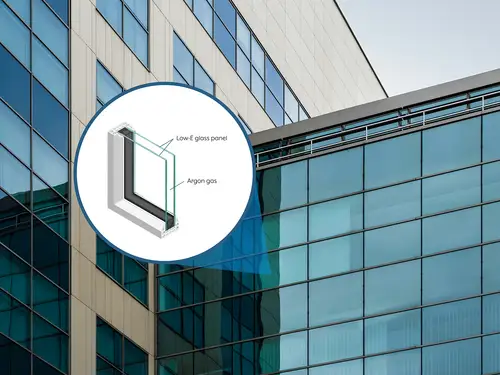
Energy-efficient windows such as double-glazed windows can also serve a secondary function of reducing the cooling needs of a building. 

Made up of two panes of glass that are separated by a gap filled with inert gases (e.g. argon) that are poor conductors of heat, these types of windows reduce the transfer of heat from outside to inside, keeping indoor temperatures cooler. Optionally, the glass panes can also be coated with a low-emissivity film (Low-E) that reflects heat-carrying infrared and UV rays while allowing visible light to pass through. 

With double-glazed windows instead of the normal single-glazed windows, heat transfer can be reduced by up to 50%. Integrating technology with architectural elements, another form of glazed windows is electrochromic glass, which can change its tint electronically depending on external light and temperature. This helps to block out sunlight and solar heat, reducing heat gain internally and peak cooling loads by up to 25-58% morethan Low-E windows.

3. Roofing

Roofing plays an important role in reducing heat gain in buildings, especially in Southeast Asia which face intense solar radiation and high ambient temperatures. 

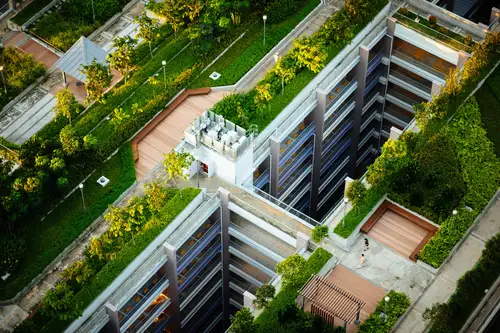
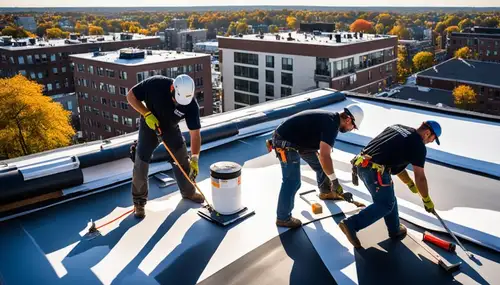
Among popular roofing options that keep buildings cooler such as cool roofs, green roofs, insulated metal panels and the emerging phase change material (PCM) roofs, cool roofs are the most value-for-money investment. Made up of reflective elements such as white thermoplastic polyolefin (TPO), they are a cost-effective solution that reflects a high percentage of solar energy from sunlight, reducing cooling loads and achieving an energy savings of up to 55%

However, other roofing alternatives have their own advantages as well while providing substantial heat gain reduction: 

  • Green roofs provide stormwater management and an aesthetic value with greenery
  • Insulated metal panels are more durable and can speed up construction timelines with pre-fabrication
  • PCM roofs can delay indoor heat buildup, shifting cooling loads to off-peak hours, which is beneficial in areas with time-of-use tariffs.

4. Construction Materials

One of any building's foundations, its walls, can also make the entire building more energy efficient, indirectly resulting in financial gains for owners. 

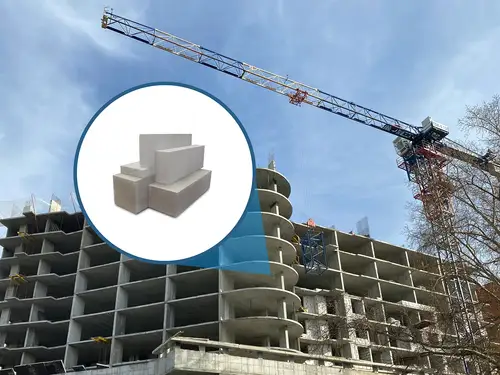
This is accomplished through better insulating construction materials, such as autoclaved aerated concrete (AAC) that contains air pockets within, which help to reduce overall cooling needs. For non-load bearing walls specifically, AAC is one of the preferred choices for insulation as it is affordable and familiar to contractors in Southeast Asia. Not only is it easily integrated with reinforced concrete framework, the standard construction method in the region, AAC has a much lower thermal conductivity and is found to reduce heat transmission by 40% more compared to traditional concrete. 

By reducing the heat gain from the external environment to indoors, the demand on the HVAC system is reduced, lowering energy consumption. For buildings in colder climates, the insulating properties of AAC also helps buildings retain heat within, reducing energy used for heating as well.

Technology

1. Integrated Daylight Harvesting & Occupancy Lighting

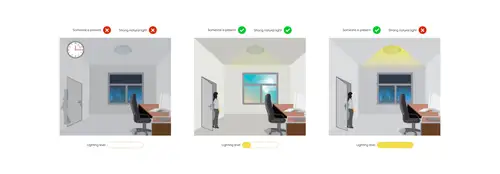
Lighting, which makes up about 29% of a building's energy consumption, can be optimised using a two-fold logic that incorporates both daylight harvesting system and occupancy lighting, especially in areas such as meeting rooms and corridors. 

The former uses photosensors to detect the amount of available natural daylight and automatically dim indoor lights, while the latter uses occupancy sensors (e.g. infrared heatmapping sensors) to detect whether someone is in a room and switches lights on when someone is present. 

Combined via a building management system, the occupancy-based system handles when to switch lights on, while the daylight harvesting system determines how much light to use, ensuring that the amount of energy used for lighting is kept to the minimum required. This is especially impactful for less utilised areas such as corridors, and pantry areas to keep energy consumption minimal.

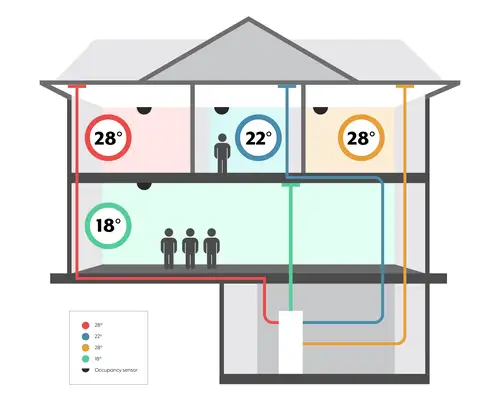
2. Demand-controlled HVAC System with Smart Zoning

Systems controlling heating, ventilation, and air-conditioning, commonly known as HVAC systems, is a form of technology used to control the indoor environment to a comfortable level. Instead of manual HVAC systems, smart HVAC systems use demand-controlled automation and zoning functions to automatically control indoor temperature, airflow, and ventilation.

For the former, different forms of occupancy sensors, such as infrared or CO2 sensors, can provide data to the building management system to dynamically adjust these parameters based on real-time occupancy. This can be used alongside the latter (i.e. smart HVAC zoning), which divides up the building into different zones and allow specific controls for each area. 

Together, the building is only cooled for smaller, segregated areas where somebody is present. This can be particularly relevant for hotels where individual rooms can be cooled only when guests are present, reducing HVAC loads across unoccupied spaces.

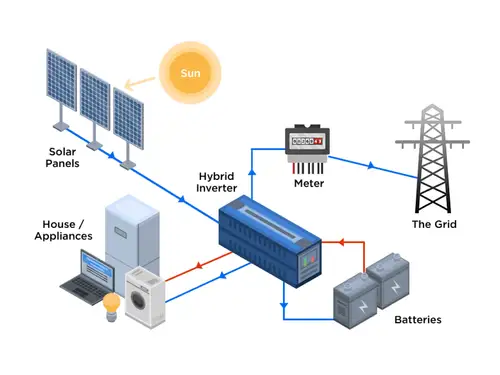
3. Solar Integration, Battery Storage & Smart Load Management

Apart from reducing energy consumption by optimally powering appliances, another way to use less grid energy is by harnessing the abundant natural energy around us. 

The combination of solar integration with battery storage and a smart load management system can help you take advantage of untapped solar energy. By using photovoltaic panels installed on roofs, sunlight can be converted into ready-to-use electricity. Any excess energy that is not used can be then stored in a battery storage system (e.g. a lithium-ion battery), which can be used when there is insufficient sunlight, such as at night or on cloudy days. 

These can then be linked with a smart load management system, which can determine when to: 

1. use the solar energy directly
2. charge the battery
3. use the stored energy
4. use energy from the grid 

This ensures that only required grid energy is spent while still maintaining a comfortable internal environment.

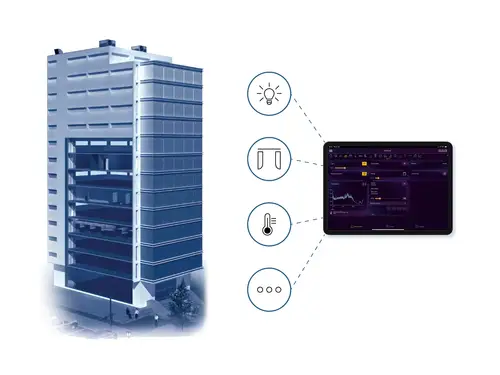
4. Integrated Building Management System (BMS)

Tying in various technology solutions, an integrated building management system (e.g. industrial-grade protocols like KNX) acts as a centralised command centre across an entire building.
To help keep the building energy-efficient, they connect various sensors and smart equipment (e.g. lighting, blinds, HVAC systems) to optimise building operations in individual zones, collect and analyse energy consumption data, and recommend predictive maintenance to reduce downtime and energy loss. 

Here are examples of how BMS work in different settings: 

Office buildings 
For office buildings where most of the activity happen in the open-plan workstation areas during operational hours, lights and HVAC systems are only switched on to optimal levels when someone is present during a specified time of day. For other less utilised areas like meeting rooms, lights and HVAC can either be switched off or kept at a minimum. 

Malls
For malls where the entire building is required to be operational throughout with multiple unique environments for different tenants, lights and HVAC systems are tailored to individual tenants needs. For example, F&B outlets require stronger ventilation and cooling compared to retail stores due to odours and kitchen heat loads respectively. 

This ensures that every part of the building is optimised to use only the required energy
Implementing energy-efficient solutions, be it through technology or architectural elements, is not just about sustainability — it is also a form of strategic financial investment. A combination of these solutions not only help you cut down on operational costs such as utility bills, they also increase the building's market value for rental, sale, and investment while helping you qualify for government rebates and incentives. With energy costs on the rise and green building standards tightening, these strategies act as future-proof investments that both create immediate and long-term financial value.