0

Smart Aquascaping: Unite Art and Caretaking with Automation

For those seeking an outlet for artistic expression and possessing a love for aquatic life, aquascaping is an increasingly popular at-home hobby. Aquascaping is taking aquarium keeping to the next step; it goes beyond just taking care of aquatic animals and plants and steps into the realm of creating a beautiful art piece. From the classic Dutch style to the visually intriguing Iwagumi style, the aquarium is your oyster when it comes to designing a unique aquatic tapestry. 
 
To create a healthy and beautiful aquascape, it is essential to ensure that water parameters and environmental quality are kept at prime conditions constantly. Doing this manually could prove challenging, as multiple different tools are required to monitor and adjust respective parameters, and being away from home could mean that the aquarium is left alone and endangered. 

With a smart home, these hassles can be taken care of using a single system that can automate mundane and tedious tasks for you. From managing equipment that monitors and adjusts parameters to alerting you when further intervention is needed and more, the smart home system frees you up to enjoy the fun of crafting your aquascape and caring for your aquatic pets.
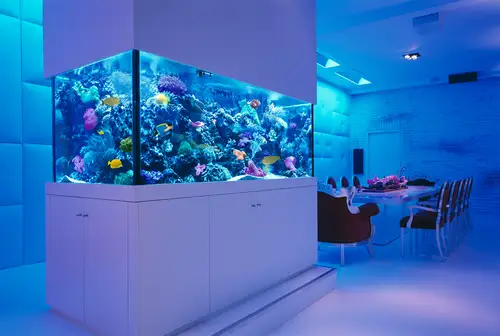
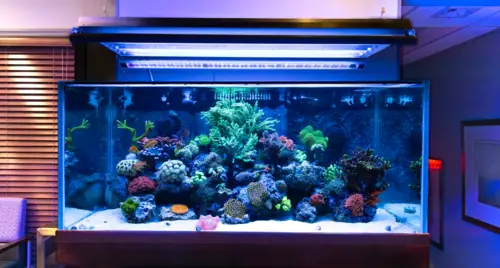
Image of an aquarium. Credits: https://www.islandfishandscale.com/

Here's what a smart home can do for you:

Monitoring made easy ✅
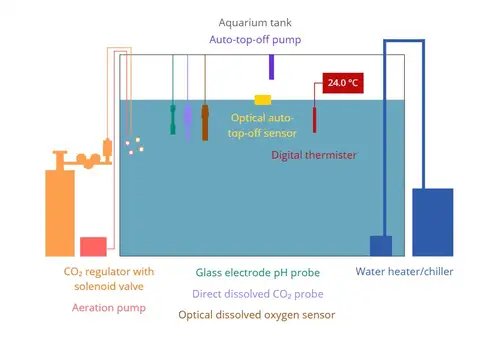
Parameters such as temperature, pH, CO₂, dissolved oxygen, and water level are continuously monitored using sensors and probes. These then transmits electrical signals to the KNX system via a gateway.
  • Waterproof digital thermistors measure water temperature.
  • Glass electrode pH probes measure water acidity/alkalinity.
  • Direct dissolved CO₂ probes measure carbon dioxide concentration.
  • Optical dissolved oxygen probes measure oxygen saturation.
  • Optical auto-top-off sensors measure water level while also detecting both evaporation and water changes.
Automatic adjustments ✅
When the system recognises that any parameters has exceeded its optimal range, it activates the corresponding equipment to rectify. 
  • Depending on the temperature of the water, aquarium heater/chillers are activated until it is back within range, which is around 24–28°C for tropical species.
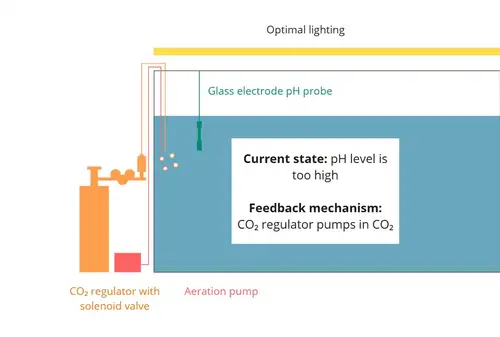
  • If the water is too alkaline, the solenoid valve of the CO₂ regulator is opened to inject CO₂ into the water. Conversely, if the water is too acidic, the aeration pump supplies in more oxygen to regulate the pH of the water. 
  • At night, when plants consume oxygen instead of CO₂, the aeration pump is activated. During the day, when plants photosynthesise and take in CO₂, the aeration pump stops to balance the aquarium parameters.
  • If the water level drops below a threshold, the auto-top-off system pumps in more water.
If any threshold values are exceeded by a significant margin and further maintenance is required, the system informs you with a notification.
Maintain a suitable environment ✅
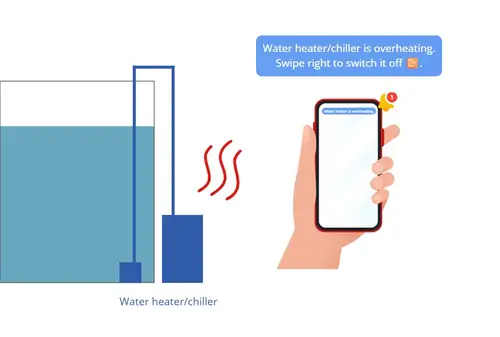
  • If any tank failure, such as power outage, equipment overheating, or leaks are detected, the system immediately alerts you with a notification.
  • Algae outbreaks happen when CO₂ levels fluctuate and when there is excessive light. It is prevented when the system ensures consistent day/night light cycles while also synchronising CO₂ injection with lighting schedules.
  • The appropriate level of lighting is used to match circadian rhythms by detecting the level of natural daylight using sensors.
Balance between involvement and automation ✅
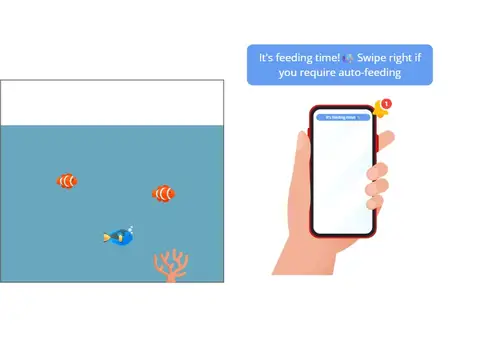
  • Based on the type of aquatic life in the aquarium, the system determines an appropriate feeding routine. When it is time to feed, the system reminds you to feed the aquatic life with the right amount of food via a notification.
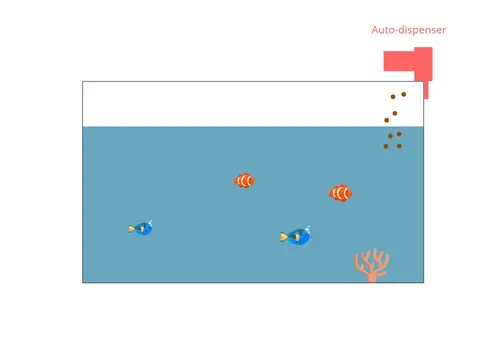
  • If it is detected that you have not fed the aquarium (with the help of a smart aquarium lid sensor) within a specified duration, the system activates auto-dispensers to feed on your behalf.
Providing you a peace of mind ✅
While you are away from home, the smart home system takes care of the above water parameters, environmental quality, and feeding schedule, giving you peace of mind.
Want to start your very own automated aquascaping set-up or retrofit your aquarium with automation technology? Here's how it all comes together, from setting it up to its daily operation:
Aquarium is fitted with the various sensors and feedback mechanisms that are linked to the KNX system.
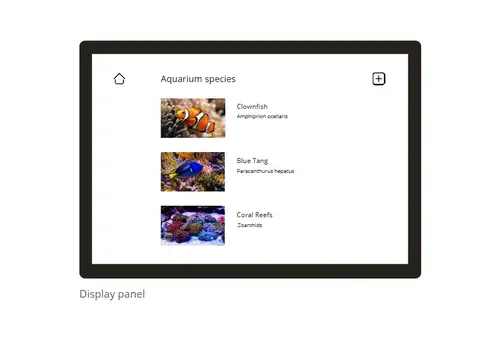
Input aquarium species types into the system to generate best-fit environmental qualities and feeding schedule.
The system maintains optimal environmental conditions (e.g. water quality, lighting) constantly.
If there are any tank failures like equipment overheating, the system alerts you with a notification.
The system reminds you to feed your aquatic life on schedule.
If the system detects that you have not feed them, it will feed on your behalf.
Having a well-balanced water and tank environment is crucial in supporting the long-term health and longevity of the aquatic ecosystem. With the help of smart home hubs like a KNX system in place, these parameters can be tested and adjusted accordingly at regular intervals without your manual effort. With the technical side handled, you're free to focus on what makes aquascaping special — turning your aquarium into a living work of art.