
Temperature control in a fresh design
The room thermostat in the form of a rotary dimmer is able to be connected with both 230 V and 24 V installations and offers a simple way to operate four different temperature modes - heating, cooling, ECO, and open window detection. It has an LED display, and is operated using two-point control or pulse width modulation.
When users long press on the rotary knob, the heating system switches to frost-protection mode. To set the temperature, simply rotate the control unit. Available in four versions, three of which have internal temperature sensors, and two of which are able to sense a drop in temperature and automatically turn down the heating. The FTR 231 model has an external temperature sensor that registers the temperature combined with electrical underfloor heating, and an ECO mode (night setback). With the exception of the RTR 230 model, the thermostats can either be operated using two-point control or pulse width modulation. More information on each version can be found below.

Heating control with a rotary knob
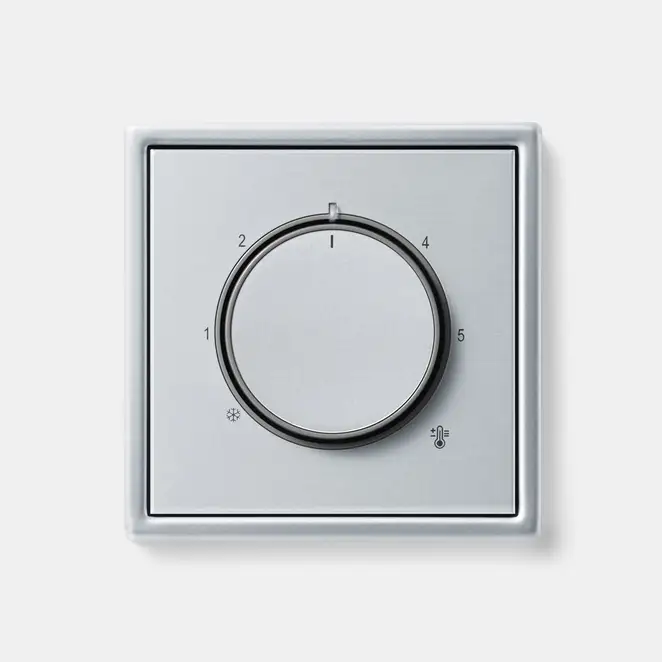
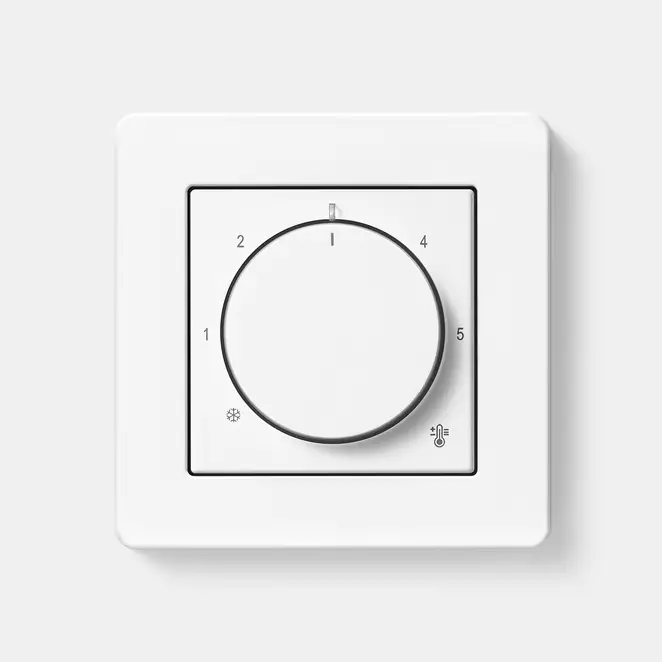
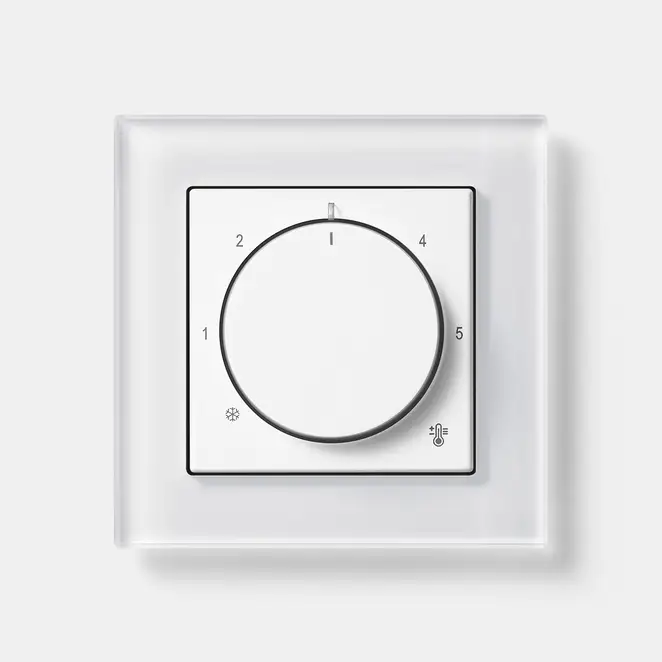
The rotary knob for the room thermostat has a diameter of 42 millimetres and a reduced height, which is the same as rotary dimmer covers. The room thermostats are also available in the various designs such as the LS and A ranges. As such, they can come in a variety of colours and materials, giving flexibility to the interior's design.









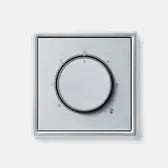
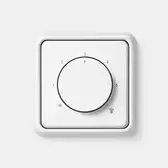
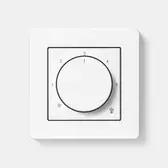


For more convenience
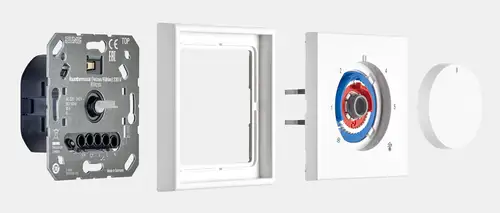
The mechanical adjustment range of the thermostats is 220 degrees. With the help of a mechanical range limiter, it is possible to define the maximum settable value, which is particularly useful in public areas. For this, both rings (red and blue) must be rotated into the correct position within the cover. The separately available demounting aid helps with removing the setting knob - the suction lifter is simply put onto the covers, making it easier to remove the flat rotary knobs.
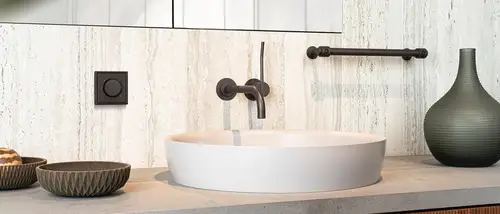
Room thermostat for modern heating systems
The RTR 233 room thermostat is suitable for controlling valve drives as well as electrical and infrared heating systems. Electrical and hydronic underfloor heating systems can likewise be regulated with a switching current of up to 16 A. An integrated temperature sensor measures the room temperature. Additionally, the device has an input for centrally activating cooling and a universal input for ECO temperature control, for example via a central clock, or for automatic switching between comfort and ECO temperatures depending on if presence is detected by a presence detector.
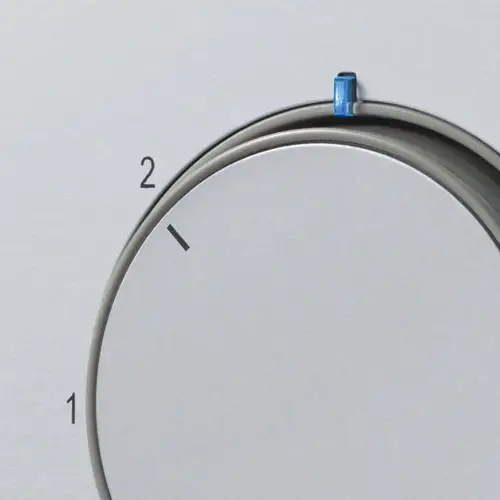
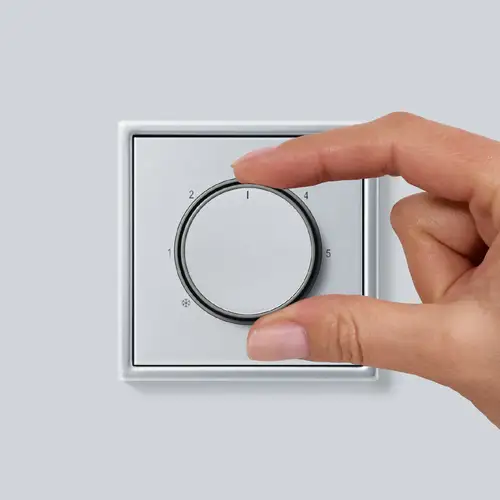
Different versions of the thermostats
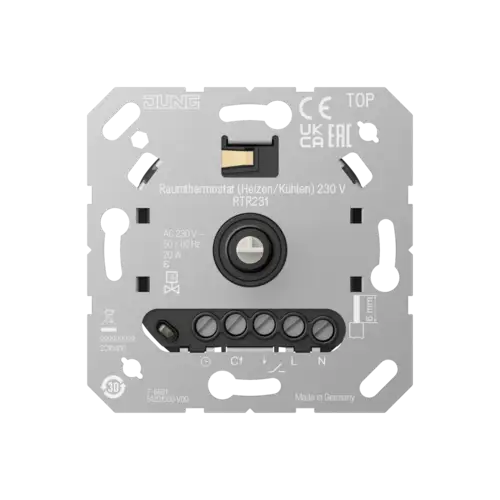
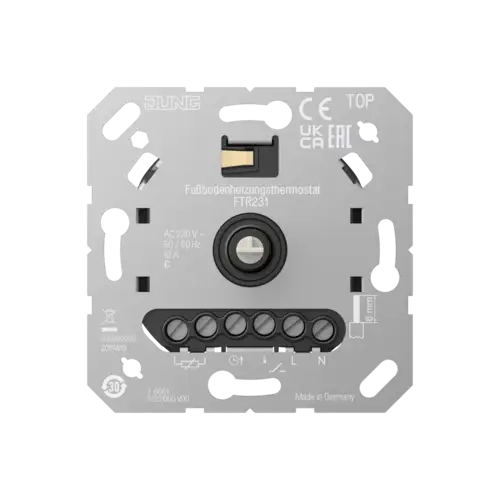
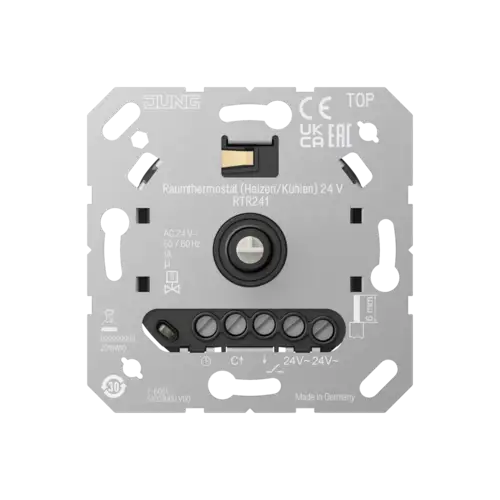
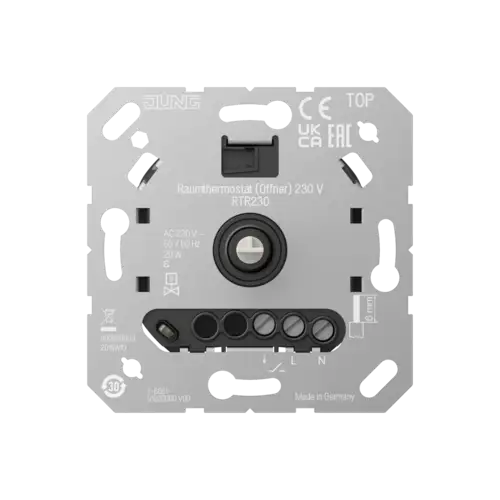
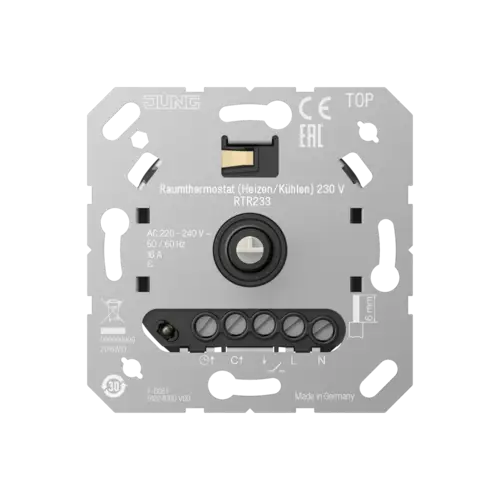
Valve drive
The thermal valve drives close when deenergised (NC) and have a thermal expansion element. The forceless installation onto the valve is achieved using the first-open function. With the re-open function, it is possible to open the valve drive manually for servicing. It also has a connection cable of one metre.


JUNG Newsletter
Product news, architecture references and smart home trends: With our JUNG newsletters you are always well informed when it comes to trends and news.